
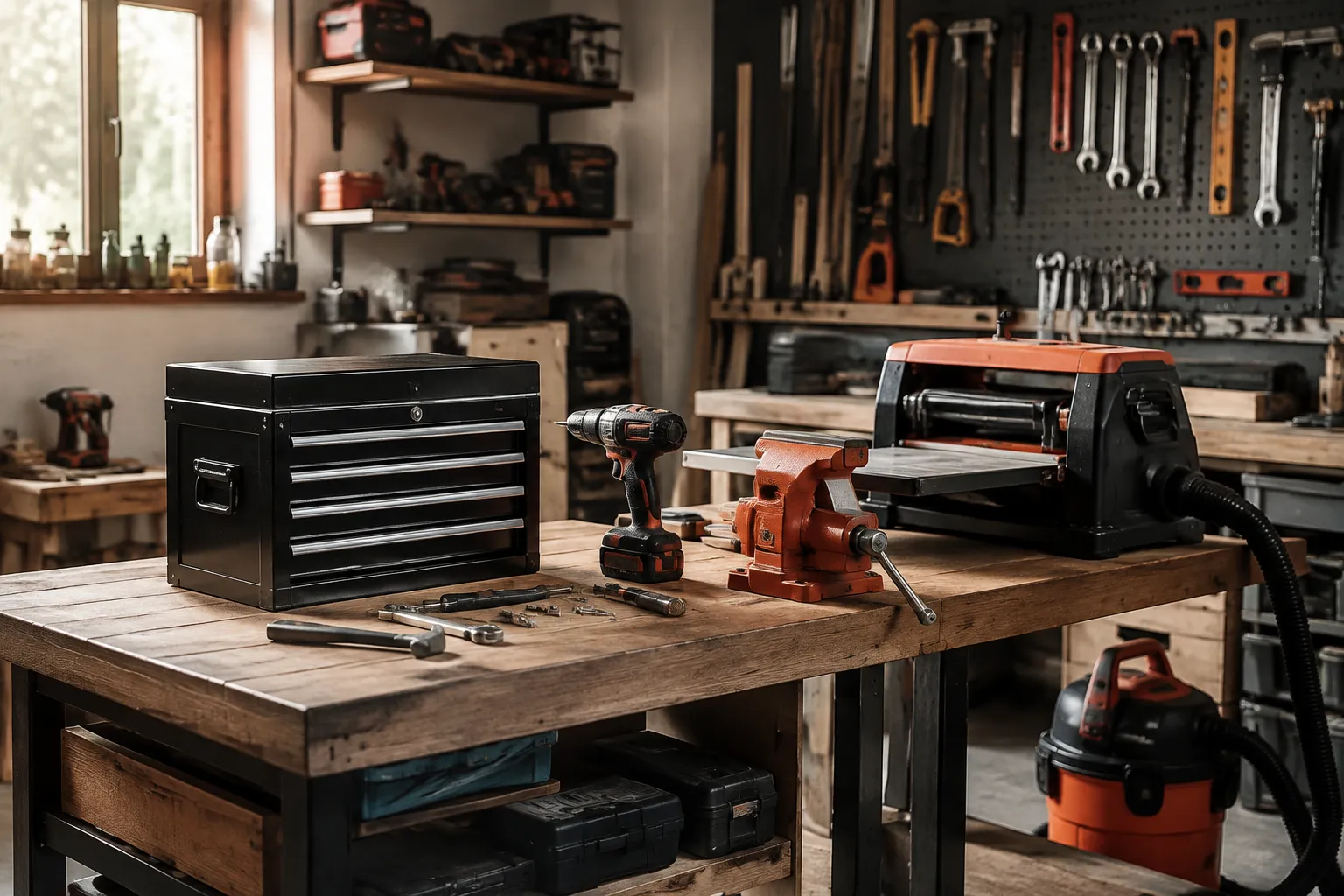
Vevor occupies a very specific lane in the tool market. It is the brand that appears when a home workshop owner searches for a metal lathe, a shop press, a bead roller, a diesel heater, a hydraulic crimper, and a welding cart in the same evening and does not have the budget, patience, or floor space to build a dream shop from flagship names alone.
That matters because home workshops are rarely built in one clean purchase. They grow sideways. A garage corner gets a vise. Then a drill press. Then a cart for organizing abrasives. Then some slightly irrational but still understandable machine purchase, often justified by one project and then kept alive by six others. Brands that serve this kind of workshop are judged differently from brands that supply a professional machine shop or a contractor with daily payroll pressure. The question is less about prestige and more about whether the tool arrives close enough to useful that the owner can tune, adapt, and work with it.
Where Vevor Actually Fits
A practical guide to Vevor has to start by refusing the wrong frame. This is not a brand built around heirloom finish, deep dealer support, or the quiet satisfaction of buying once and forgetting the receipt. Vevor sells range. The catalog is sprawling, almost unruly. Small machine tools sit next to restaurant equipment, pressure washers, engine stands, trailer parts, dust collectors, handrails, pumps, and storage hardware. That sprawl tells the truth about the brand better than any slogan could.
For a home workshop, that range is part of the appeal. A person putting together a capable garage shop often needs the middle layers filled in. Not only the headline machine, but the stand, the worktable, the arbor press, the parts washer, the transfer pump, the wheel chocks, the magnetic drill, the tubing roller. Premium brands often ignore those in-between purchases or price them as accessories for businesses. Vevor treats them as the business.
The brand makes the most sense for owners who think in terms of function per dollar and can tolerate some finishing work. That last part is crucial. Vevor is often strongest when it gets a buyer 75 to 90 percent of the way to a very useful setup. The remaining 10 to 25 percent may involve cleaning factory grease, checking fasteners, squaring a fence, replacing a flimsy switch, adding better casters, or simply accepting that the paint and packaging belong to a lower tier than the capability.
The Home Workshop Reader This Brand Serves
There is a recognizable type of buyer behind the best Vevor purchases. It is the person with a modestly crowded bench, a tape measure clipped somewhere nearby, and enough mechanical confidence to inspect a machine before trusting it. This buyer reads dimensions carefully. They own calipers. They understand that a product photo can flatter a machine in the same way real estate listings flatter a small kitchen.
For that kind of workshop owner, Vevor can be liberating. A manual pipe bender that costs far less than an industrial version opens up projects that would otherwise stay on a sketch pad. A compact belt grinder or mini lathe can turn an idle interest in fabrication into actual metal chips on the floor. A hydraulic shop press or bearing separator becomes the difference between improvising with threaded rod and doing a job with some control.
For the owner who wants every control to feel refined out of the box, every casting to look clean, and every instruction manual to answer the obvious questions, the match gets shakier. Home workshops are supposed to save frustration, not import it by freight. Vevor tools ask for discernment. Sometimes they reward it very well. Sometimes they remind the buyer that low prices can shift labor from the factory to the garage.
Machines That Tend to Make Sense
The strongest Vevor category for many home workshops is the category of occasional-use shop equipment. Presses, stands, bead rollers, vises, metal brakes, engine support bars, work tables, blast cabinets, and utility carts all fit this pattern. These are tools where rigidity, dimensions, and basic mechanical layout matter more than polish. If the frame is decent and the geometry is usable, a careful owner can often improve the rest.
Small machine tools can also be a sensible buy, though with more caution. Benchtop lathes and milling machines are seductive because they promise a whole new level of capability in a suburban garage. They also concentrate the exact issues that separate an acceptable budget machine from an irritating one: backlash, alignment, rough castings, inconsistent hardware, weak documentation, and variable quality control. A home shop owner who enjoys setup, adjustment, and incremental upgrades may find real value there. Someone who wants to begin cutting accurate parts the same afternoon may feel ambushed.
Then there are the humble winners. Storage cabinets, hose reels, magnetic tool holders, welding tables, shop stools, lifting hardware, and material handling gear rarely become conversation pieces, yet these are often the purchases that make a workshop work better every day. Vevor is often most convincing when it solves practical shop friction instead of trying to impersonate top-tier precision equipment.
Tools That Deserve More Skepticism
Anything that depends heavily on precise calibration, refined controls, or long duty cycles deserves a closer look. The issue is not that Vevor never sells a good version of those tools. The issue is that the margin for disappointment gets wider. A budget drill press stand is one thing. A machine expected to hold tight tolerances through repeated use asks more from bearings, castings, motors, switches, and assembly than a bargain catalog can consistently guarantee.
Consumables and accessories also deserve scrutiny. Clamps, cutters, inserts, abrasives, and measurement-adjacent items can look like easy add-ons, but those are often the products where material quality reveals itself quickly. A cheap stand can still stand. A cheap cutter announces its shortcomings in the first serious cut. The home workshop owner who saves money on the machine and spends more carefully on blades, bits, chucks, and measuring tools often lands in a better place.
Electric and powered equipment with safety implications should be approached with adult seriousness. Cords, switches, guards, and wiring quality matter in obvious ways. Any new shop machine, regardless of brand, deserves inspection before use. With Vevor, that step feels less optional. Home workshops reward caution because they are personal spaces, usually attached to a house, often used at odd hours when nobody is around to notice the smell of overheating insulation or a loose fastener walking out of place.
How to Read a Vevor Listing Without Getting Burned
A brand landing guide should say this plainly: the Vevor product page often requires slower reading than the price tag suggests. Dimensions need to be checked line by line. Photos need to be treated as suggestive rather than conclusive. Capacity claims should be read as broad indicators, not as invitations to run a machine at its advertised ceiling forever.
The smart approach is almost forensic. Compare the listed weight to competing tools. Lightweight machines can still be useful, but low mass tells a story about materials and stiffness. Look for motor ratings, table sizes, throat depth, jaw width, roller diameter, bed length, spindle taper, and travel measurements. Search for replacement parts before buying if the tool has wear items. Read complaints for patterns rather than isolated outrage. One damaged shipment says little. Repeated reports about misaligned tables or weak fasteners say more.
It also helps to think in workshop terms rather than online shopping terms. The right question is often: what will this tool touch? A tubing roller may need a stand. A mini lathe may need better tooling, a chip tray solution, a measuring setup, and a cleaner place to live than the corner of a folding table. Vevor prices can make the entry point look astonishingly low, but a home workshop still pays the full ecosystem cost.
Why Some Owners End Up Liking the Brand More Over Time
There is a pattern with Vevor purchases that would make little sense in a glossy showroom but makes perfect sense in a garage. A tool arrives a little rough. The owner deburrs an edge, replaces mediocre hardware, trams a surface, lubricates moving parts properly, and maybe fabricates one small improvement on a Saturday morning. By Sunday, the tool has stopped being a commodity and started being part of the shop.
That kind of relationship is easy to mock from a distance. It can also be deeply rational. Home workshop owners often enjoy adaptation as part of the hobby itself. They build drawers under a saw stand, mount machines on heavier bases, wire in better lighting, and repaint surfaces that rust too easily. A Vevor machine or accessory can slide into that culture naturally because it arrives as workable material, not as a sacred object.
Brand loyalty in this segment rarely looks elegant. It looks like a press that has worked faithfully for three years after getting better bolts, or a welding cart whose shelves were re-drilled to hold a preferred setup, or a parts washer that seemed ordinary until it quietly saved enough time to justify its shelf space. Utility has a way of sanding down disappointment.
Where the Frustration Usually Starts
The worst Vevor experiences tend to begin with mismatched expectations. A buyer sees a machine category that usually belongs to expensive catalogs and assumes the low price reflects a temporary market quirk rather than a different standard of finish, support, and inspection. Then the crate shows up, the manual feels thin, the setup takes longer than expected, and the savings suddenly include several hours of unpaid problem-solving.
Shipping and packaging are part of the story too. Home workshop equipment is heavy, awkward, and easily scarred. Bent sheet metal, chipped paint, missing hardware, and damaged crates hit this end of the market harder because buyers accepted tradeoffs on price, not on the basic hope that all the parts would arrive. An experienced tool buyer shrugs at cosmetic flaws and focuses on whether the machine can be squared, tightened, and put to work. A first-time buyer may feel, reasonably enough, that the entire purchase has gone sour before the first cut or press.
Customer support often becomes the dividing line between a tolerable gamble and a lingering irritation. Established industrial brands charge more partly because the after-purchase system exists. That infrastructure is invisible until something breaks. Vevor's lower-cost model can leave the owner relying more heavily on self-diagnosis, community forums, parts improvisation, and general shop stubbornness.
Building a Vevor Based Shop Without Making It a Headache
The sensible way to use the brand is selective saturation. Fill the workshop with Vevor where the value is structural, occasional, or supportive. Be more selective where precision, feel, and long-running reliability drive the result. That split produces a better shop than ideological loyalty to either budget gear or premium gear.
A strong home workshop might use a Vevor cart, press, stand, roller, bench shear, lift table, storage rack, and blast cabinet, while reserving more trusted money for measuring tools, vises that truly matter, power tool batteries, a welder with dependable support, or a drill chuck that will not become a weekly argument. Shops built this way tend to feel grounded. The owner knows exactly which corners were cut and why.
That approach also preserves morale, which is an underrated workshop resource. Nothing drains enthusiasm faster than spending the whole budget on one prestige tool and having no money left for the fixtures and support gear that make work efficient. A home garage with modest machines, decent organization, and the right accessories can accomplish more real projects than an aspirational setup built around one expensive centerpiece and a lot of bare concrete.
The Brand Through the Lens of Space
One reason Vevor has become hard to ignore is that it aligns with the physical reality of home workshops. Most people are not fitting out a detached industrial bay. They are negotiating with one-car garages, basement corners, shared driveways, ceiling height, winter damp, and the eternal problem of where to store sheet goods without blocking the lawn mower or the freezer.
In that environment, a broad catalog of compact, affordable, specialized equipment has real power. The home shop owner can buy a dedicated machine for one category of task instead of endlessly rigging the wrong tool to do it. A small plate roller, a benchtop arbor press, or a modest parts washer can justify itself simply by making certain jobs possible in a confined footprint. Even when the machine is imperfect, the convenience of having it in-house changes what projects get attempted.
That is probably the clearest way to understand Vevor. It is a brand for turning empty corners into capability. Sometimes that capability arrives with rough paint, generic handles, and a manual that seems translated through three layers of haste. Then a shelf gets reinforced, a machine gets bolted down, a tray fills with shavings, and the garage starts behaving less like storage and more like a workshop.