
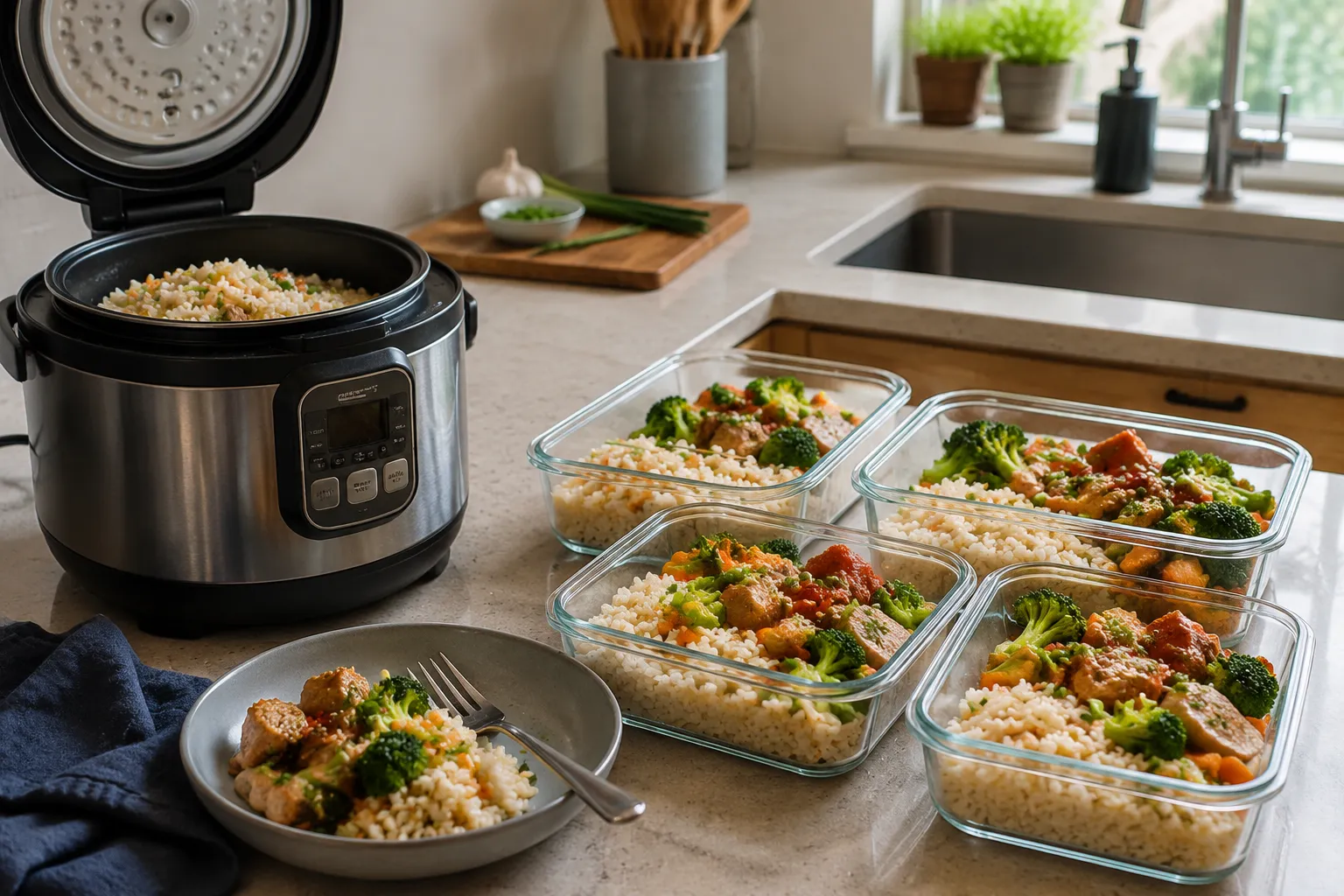
The rice cooker occupies a strange place in the modern kitchen. It sits on the counter, used twice a week for plain jasmine rice, and gets talked about in the same breath as the toaster oven and the Instant Pot. But the machine has a second life that almost nobody explores. A basic 5-cup rice cooker, the kind with a single switch and a warm light, can handle an entire week of dinners. Not sides. Dinners. The limitation is not the machine. It is the assumption that a rice cooker is for rice.
The key is understanding what the appliance actually does. It applies steady, moist heat at a consistent temperature until the contents reach boiling point, then it drops to a simmer until the moisture is absorbed. That is a braising cycle. It is the same cycle used for pot roast, for beans, for polenta, for whole chicken thighs. The rice cooker just does it without supervision and without scorching the bottom. Once a person stops treating the machine as a grain cooker, the possibilities multiply.
A Short Case for the $20 Machine
The expensive fuzzy-logic cookers with multiple settings are fine, but they overcomplicate the core mechanism. These machines have a heating plate, a pot, and a thermostat. The switch flips to warm when the temperature rises past the boiling point of water, which signals that the liquid is gone. That is the entire engineering. A basic model with a keep-warm function costs less than a nice cast iron skillet and takes up the same counter space.
The simple machine has one advantage that the digital models do not. It has no sensors to confuse. A person can throw in a cup of lentils, a can of tomatoes, a chopped onion, and a handful of spices, and the cooker will do exactly what it does with rice. It heats, it simmers, it switches to warm when the liquid is absorbed. The food is done. The timing is not precise. That is the point.
Batch cooking with a rice cooker means accepting that dinner will not be a plated masterpiece. It will be a bowl. But a bowl can be a complete meal, and a person can make three different bowls in one hour on a Sunday afternoon. That is the trade. The machine does not sauté or sear. It braises, steams, and simmers. Everything that goes in the pot comes out tasting like it was cooked low and slow, because it was.
The Structure of a Rice Cooker Week
One standard 5-cup machine yields roughly six cups of cooked food per batch, which covers two to three meals for a single person or one meal for a couple. A practical approach is to cook two batches on Sunday, each with a different flavor profile, and fill the fridge with containers. That gives four to six servings of food that require no thought on a Tuesday night.
The batches should not be the same. One pot can hold a tomato-based lentil ragout with smoked paprika and a splash of red wine vinegar. Another pot can hold chicken thighs with soy, ginger, garlic, and a cup of short-grain rice thrown in at the halfway point. The two pots require the same amount of effort, which is almost none, but they create different meals. The ragout goes over pasta or a baked potato. The chicken and rice is complete on its own.
There is a method to the order of operations. Most rice cookers take about 20 minutes to cook white rice and about 40 minutes for soaked beans or brown rice. A batch of chicken thighs with rice takes about 30 minutes total. The machine does not need stirring. A person does not need to stand near it. The only real skill is knowing when to add the grain so it cooks in the remaining liquid without turning to paste.
For the chicken batch, the order matters. Put the liquid, aromatics, and chicken in first. Start the cooker. After 10 minutes, when the liquid is hot but not boiling, dump in the rice and give it one stir. The rice absorbs the chicken juices and spices as it cooks. The result is a pilaf with actual depth. The texture is different from stove-top rice, softer and more absorbing, but that is the style of the machine.
Ragout, Dal, and Other One-Pot Realities
Lentils are the most forgiving ingredient in a rice cooker. They do not need pre-soaking. They hold their texture through the cooking cycle. They absorb whatever liquid they are given. A cup of brown or green lentils, a can of diced tomatoes with their juice, a chopped onion, a few cloves of garlic, a tablespoon of smoked paprika, a teaspoon of cumin, and a cup of water or stock. That is the whole recipe. Start the cooker. Walk away. When the switch flips to warm, the dal is ready.
The same logic applies to split peas, which take a bit longer but turn into a thick porridge that freezes well. Chickpeas are a different story. They need 8 hours of soaking and a longer cooking cycle, which makes them less convenient for a weeknight batch. Brown rice, on the other hand, cooks perfectly in a rice cooker in about 40 minutes, with a chewy texture that holds up in the refrigerator for days.
Beans are the one category that requires caution. Cooking dry kidney beans in a slow cooker or rice cooker at a low temperature can leave toxins intact if the liquid does not reach a full boil. The rice cooker does boil, but the temperature is not as vigorous as a rolling stovetop boil. The safe move is to use canned beans, which are already cooked, and add them in the last 10 minutes of the cycle so they just heat through.
A person who wants to mix grains and beans in one pot should treat the grain as the base and the bean as the flavoring. A cup of brown rice, a can of black beans drained, a cup of salsa, a teaspoon of cumin, and a cup of water. That cooks into a satisfying burrito bowl filling. The beans do not break down because they are already cooked. The rice absorbs the salsa. The result tastes like a slow-cooked Mexican rice, not like a compromise.
Steaming Vegetables on Top of Everything Else
Almost every rice cooker comes with a plastic steamer basket that goes unused. That basket is the best tool for adding vegetables to a batch without dirtying another pan. When the cooker is halfway through its cycle, set the basket on top of the simmering pot and fill it with broccoli florets, snap peas, or sliced carrots. The steam from below cooks them in about five minutes. They come out crisp and bright, not boiled to gray.
The basket method requires a small amount of timing. The vegetables need to go in during the last five to eight minutes of the cooking cycle, when the liquid is actively steaming. If they go in too early, they turn to mush. If the cooker has already switched to warm, the steam drops off and the vegetables sit in gentle heat, which does nothing. The trick is to set a phone timer for the halfway point and check the pot.
Meatballs cook well in the rice cooker, which is an unexpected discovery. A batch of meatballs made from ground beef or turkey, mixed with breadcrumbs, egg, and grated onion, can be dropped into a pot of tomato sauce at the start of the cycle. They braise gently in the sauce for 25 minutes and come out tender. The texture is different from pan-seared meatballs, softer and more like a meat ragout, but the flavor is deep and the cleanup is nothing.
Whole chicken thighs are the best protein for the machine. They have enough fat to stay moist through the long cooking cycle. A person can layer them in the pot with rice, or cook them solo with a cup of stock and a few slices of ginger. The meat falls off the bone. The stock becomes a sauce. The leftover liquid can be poured over the rice that will be cooked the next day.
The Timing Reality of a Weeknight
The common objection to rice cooker batch cooking is that the cooking time is long, 30 to 40 minutes, which is no faster than a stove-top meal. That objection misses the point. The rice cooker does not demand attention during those 30 minutes. A person can unload the dishwasher, help with homework, take a shower, or sit down for the first time all day. The cooker is not cooking. It is holding a temperature.
The other objection is texture. A rice cooker does not produce the crisp edges of a skillet or the char of a grill. That is true and it is fine. The texture it produces, soft and saucy and absorbed, is what makes these dishes work. The dal is smooth. The chicken is falling apart. The rice is sticky and rich. A person who wants texture contrast can add a handful of toasted nuts or a spoonful of crisp fried onions on top at serving time.
Batch cooking also changes the math on busy nights. Tuesday is the night that matters. The person who comes home at 7 p.m. after a long commute, with no energy to chop an onion, opens the fridge and pulls out a container of chicken and rice. That container heats up in the microwave in two minutes. The rice cooker did the work on Sunday. The Tuesday version of the meal takes no more effort than opening a can of soup.
Three Batches That Cover a Week
The first batch is the lentil ragout described above. It freezes well, so a person can make a double batch and freeze half. The second batch is the chicken thighs with rice, which lasts three days in the refrigerator before the rice starts to dry out. The third batch is a vegetable pilaf, made with a cup of basmati rice, a diced onion, a cup of chopped mushrooms, a cup of frozen peas, and two cups of chicken or vegetable stock.
The vegetable pilaf deserves more attention than it gets. The mushrooms and onions soften in the liquid and release their flavor into the rice. The peas stay bright green because they were frozen and added in the last five minutes. The dish tastes like a risotto without the stirring. It works as a side for a piece of fish, or as a main dish with a fried egg on top. The egg adds the richness that the pilaf lacks.
A fourth batch, for the ambitious, is a simple congee. A cup of jasmine rice, six cups of water or stock, and a thumb of grated ginger. Cook for 90 minutes on the regular cycle, resetting the switch to cook if it flips to warm early. The result is a thick rice porridge that tastes like comfort. It can be eaten for breakfast with a soft boiled egg, or for dinner with scallions, soy sauce, and a few drops of sesame oil. Congee is the ultimate rice cooker dish because it cannot be made on the stove without constant stirring. The rice cooker does it unattended.
The Cleanup That Changes Everything
Cleaning a rice cooker pot is easier than cleaning a skillet. The nonstick surface releases food with a quick soak. The pot never goes in the dishwasher, but it rarely needs more than a wipe with a sponge. The lid and steamer basket rinse clean. The appliance itself never touches food directly. A person who hates scrubbing pans will find that a week of rice cooker cooking produces less dirty cookware than a single night of stove-top cooking.
The machine does have limits. It cannot sear a steak. It cannot roast vegetables. It cannot make a crisp crust on anything. A person who wants those textures should use another appliance. But the weeknight dinner problem is rarely a crust problem. The weeknight problem is the 6:45 p.m. moment of staring into the refrigerator with no plan. The rice cooker removes that moment by providing a plan in advance.
The habit of using a rice cooker for full meals rather than just rice is a small shift in perception. The machine is not a specialized tool. It is a slow cooker with a faster cycle, a steamer, and a warmer all in one. A person who treats it that way gets back an hour of Sunday afternoon and several hours of weeknight sanity. That is a fair exchange for a countertop appliance that most kitchens already own.
The last batch of the week is often the most satisfying. On Thursday night, the refrigerator holds the last container of Tuesday's chicken and rice, and a person realizes that the week of cooking is done. Thursday's dinner is a reheated bowl, topped with a handful of fresh herbs or a squeeze of lime. The rice cooker sits clean on the counter, ready for the weekend. The machine asked for nothing beyond a few minutes of preparation on Sunday. It gave back a week of evenings.