
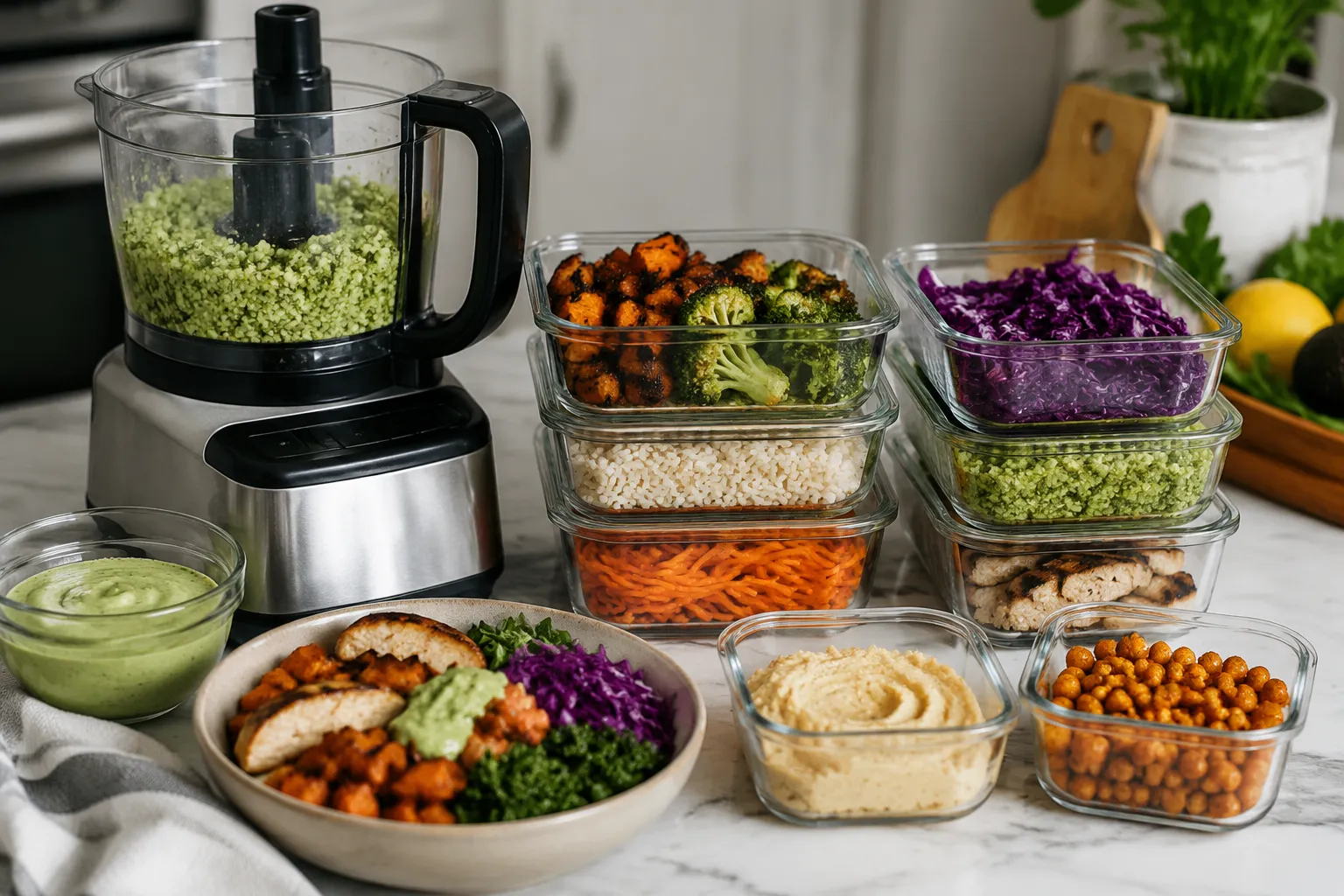
The food processor is the most returned small appliance in America, and the reason is almost always the same: someone bought it for the chopping, used it twice, and then spent the next decade watching it take up counter space. The machine itself is not the problem. The problem is that most meal prep advice treats the food processor like a blender with a grumpy personality, when it is actually a completely different tool with a completely different set of strengths.
Many kitchens treat the food processor as the second string quarterback of appliances. It sits in the cabinet behind the stand mixer, waiting for a holiday dip or a pie crust emergency. Meanwhile the owner spends forty minutes dicing onions by hand because the idea of pulling out the processor, assembling the bowl, and cleaning the blade for a single onion feels like a net loss. That math is real. A food processor only earns its keep when it does several jobs at once.
This is a column about building a meal prep routine around the machine's actual capabilities, not its advertised ones. It is about the difference between using a food processor to make one component of a meal and using it to make the entire meal in under twenty minutes of active work. The distinction matters because it changes how a person shops, how a person stores food, and whether the machine ends up in the garage sale pile next spring.
The Blade That Does the Real Work
Every food processor comes with a standard S-blade, the double-edged stainless steel disc that sits at the bottom of the bowl. Most recipes use it for chopping and pureeing, but the blade's real talent is texture control. A person can make anything from coarse rubble to a smooth paste depending on how long the machine runs. A coarse chop takes two seconds. A fine mince takes eight. A smooth paste takes thirty. That range is the entire game.
Consider the humble onion. Dicing three onions by hand takes about ten minutes and produces a few tears and a sticky cutting board. The food processor does the same job in six seconds, and the key is to pulse rather than hold the button down. Two or three pulses gives a rough chop. Five or six gives a fine dice. The texture is slightly more uniform than hand dicing, which most recipes do not care about at all. Nobody can tell if the mirepoix was cut by hand or machine once it has been sautéed for twenty minutes.
The same logic applies to carrots, celery, bell peppers, and mushrooms. A pound of mushrooms that takes fifteen minutes to slice by hand is done in three pulses in the processor. The slices will not be elegant. They will be a little ragged and uneven, but they will cook the same way and taste the same way, and the total time saved across a week of dinners is substantial.
The First Move: Build a Flavor Base in Bulk
Most meal prep advice starts with cooking a protein and a grain, portioning them into containers, and calling it a week. That approach produces five identical meals and a lot of boredom by Thursday. The food processor approach starts with a different premise: build the flavor foundation in bulk, then let each meal diverge from there.
One batch does it. A pound of onion, a pound of carrots, and a pound of celery go into the processor in stages, each pulsed to a fine dice and transferred to a large container. That makes roughly six cups of mirepoix, the aromatic base for soups, stews, sauces, and braises. Stored in the fridge, it lasts a week. In the freezer, it lasts three months, and it takes up very little space in a quart bag.
Another batch handles the garlic and ginger. A whole head of garlic, peeled, and a thumb of ginger, roughly chopped, go into the processor together. Twenty seconds of running produces a paste that forms the backbone of a dozen different meals. A spoonful of that paste goes into a stir-fry, a curry, a marinade, or a pan sauce without any further prep. The processor does in one session what would otherwise be a daily five-minute chore.
The third batch is the one that surprises people. A couple of peeled carrots, a chunk of cabbage, and a zucchini go through the shredding disc. That produces a container of shredded vegetables that becomes slaw, fritters, or a quick stir-fry base. Shredded vegetables cook faster than chopped ones, which makes them ideal for weeknights. A cabbage that takes forever to slice by hand is done in one pass through the processor, and the shredding disc cleans up with a quick rinse.
The Sauce and Dressing Trick
Vinaigrette is the gateway. A food processor makes emulsified dressing in thirty seconds, and the result is better than anything from a bottle. Oil, vinegar, mustard, a clove of garlic, salt, and pepper go into the bowl. The machine runs for thirty seconds, and the blades create a stable emulsion that stays mixed for days. The same process works for tahini sauce, peanut sauce, chimichurri, and green goddess dressing.
The trick is understanding that the processor does not just mix ingredients. It transforms them. A handful of parsley, a clove of garlic, some lemon juice, and a stream of olive oil becomes a bright green sauce that coats anything. A can of chickpeas, tahini, lemon, and garlic becomes hummus that puts the grocery store version to shame. These are not cooking tasks so much as assembly tasks, and the processor handles them in one continuous motion.
Pesto is the classic example. A food processor makes pesto in ninety seconds, and the texture is superior to hand pounding because the blades emulsify the pine nuts and oil into a creamy base. The same technique works with any herb, any nut, and any hard cheese. A batch of basil pesto and a batch of sun-dried tomato pesto cover pasta night, sandwich spread, and roasted vegetable dressing for a week.
The Dough and Crust Shortcut
Food processors excel at dough, and most owners never try it. Pie crust, biscuit dough, and even pizza dough come together in under a minute with a machine that keeps the butter cold and the flour barely worked. The processor blade cuts the fat into the flour with a mechanical precision that takes years to match by hand.
For pie crust, cold butter and flour go into the bowl, and the machine pulses until the mixture looks like coarse sand. Ice water goes in through the feed tube, and the machine runs until the dough just barely comes together. The whole process takes about twenty seconds, and the dough needs to rest in the fridge before rolling. The key is to stop well before the dough forms a ball. A ball means overworked, and overworked means tough. The processor makes this easy to avoid because the process happens in seconds.
Biscuits work the same way. Two cups of flour, a tablespoon of baking powder, salt, and cold butter go in. Pulse until coarse, add buttermilk, pulse until just combined, and dump onto a floured surface. The dough gets folded a few times by hand, cut into rounds, and baked. The entire mixing process takes less than a minute, and the biscuits come out tall and flaky because the butter was never warmed by the heat of a hand.
Pizza dough is a different beast. The processor can make a passable dough, but the machine heats up with sustained running, which warms the dough and makes it stickier. A stand mixer does a better job for pizza specifically. But for crusts, biscuits, and scones, the food processor is the superior tool because speed equals cold, and cold equals flaky.
The Grind That Changes Everything
Meat grinding in a food processor is underrated. A pound of chicken thighs, cut into chunks and pulsed in the processor, becomes ground chicken in about ten seconds. The same works for pork shoulder, beef chuck, or even salmon. The texture is slightly coarser than store-bought ground meat, which is actually a benefit for burgers and meatballs because the meat holds more moisture.
The pulse control is everything here. Two or three long pulses produces a coarse grind perfect for chili or bolognese. Five or six pulses produces a finer grind that works for meatballs and meatloaf. Going too far turns the meat into a paste, which ruins the texture. A person who pays attention to the sound of the motor learns exactly when to stop.
Fresh ground meat tastes different from pre-ground meat. It has a cleaner flavor, a brighter color, and a better texture. It also allows a person to buy whole cuts on sale and grind them at home, which saves money and expands the week's meal options. A pork shoulder that costs six dollars, ground fresh and mixed with garlic paste and ginger paste from the batch prep, becomes an entirely different set of meals than the pre-ground pork from the store.
The Cleaning Math That Decides Everything
Everyone knows the food processor is fast. The reason it does not get used is the cleanup. The bowl, the lid, the feed tube, the blade, and the disc add up to five pieces that all need washing, and the blade is sharp enough to demand respect. The math changes when a person learns the order of operations.
Dry and wet tasks happen in sequence, not in parallel. The dry stuff, like breadcrumbs, flour, and ground nuts, gets done first, then a quick rinse clears the bowl for wet tasks. That means one wash, not two. Better still, the entire bowl and blade assembly goes into the dishwasher for most machines. A quick rinse under hot water and a trip through the dishwasher cycle costs thirty seconds of active time.
The batch prep approach solves the cleanup problem by doing everything at once. The mirepoix, the garlic paste, the shredded vegetables, and the dressing all happen in one session. The machine gets used four or five times in fifteen minutes, then washed once. That single wash replaces five separate prep sessions, each of which would have required its own cleaning. The time savings are not just in the processing. They are in the total number of times a person has to touch a sponge.
The Ten-Dollar Processor That Beats the Expensive One
Size matters more than price. A full-size processor with an eleven-cup bowl is ideal for batch prep, but a small four-cup machine handles the garlic paste, the dressings, and the single-batch pesto with less cleanup and less storage space. The small machine is also easier to lift, which means it gets used more often. The best food processor is the one that lives on the counter because it is small enough to not need a cabinet home.
The sharpness of the blade matters more than the power of the motor. A dull blade bruises food and overheats it. A sharp blade cuts cleanly and fast. Most processors come with a blade that lasts several years with normal use, and replacement blades are cheap. A person who replaces the blade every couple of years gets a machine that performs like new without buying a whole new appliance.
The feed tube size matters for whole vegetables. A wide feed tube accepts a whole tomato or a quartered onion without pre-cutting, which saves time. A narrow tube forces a person to cut vegetables down to size, which defeats the purpose. Anyone shopping for a processor should check the tube width before checking the price tag.
The Sunday Session That Sets Up the Week
Imagine a Sunday afternoon that takes forty-five minutes and produces the following: six cups of mirepoix, a cup of garlic-ginger paste, three cups of shredded cabbage and carrot, a pint of green goddess dressing, a batch of pesto, and a pound of fresh ground chicken. The processor gets used seven times and washed once. The result is a fridge stocked with the building blocks for a week of meals that never taste the same twice.
Monday is a stir-fry with the shredded vegetables and the garlic-ginger paste. Tuesday is a bolognese with the mirepoix and the ground chicken. Wednesday is a grain bowl with the pesto and whatever vegetables are left. Thursday is a chicken meatball soup using the mirepoix and the ground chicken. Friday is a slaw with the shredded vegetables and the green goddess dressing. None of these meals require more than fifteen minutes of active cooking, and none of them taste like meal prep.
The food processor earns its counter space not by being the star of any single dish, but by eliminating the repetitive prep work that makes home cooking feel like a chore. The machine is at its best when it works in the background, turning a pile of raw vegetables into a week of dinners before most people finish their first cup of coffee. That is the version of meal prep that actually gets used, because it is the version that respects a person's time from the first pulse to the last rinse. The machine that gets used is the machine that gets cleaned, and the machine that gets cleaned is the machine that produces dinner in minutes instead of hours.