
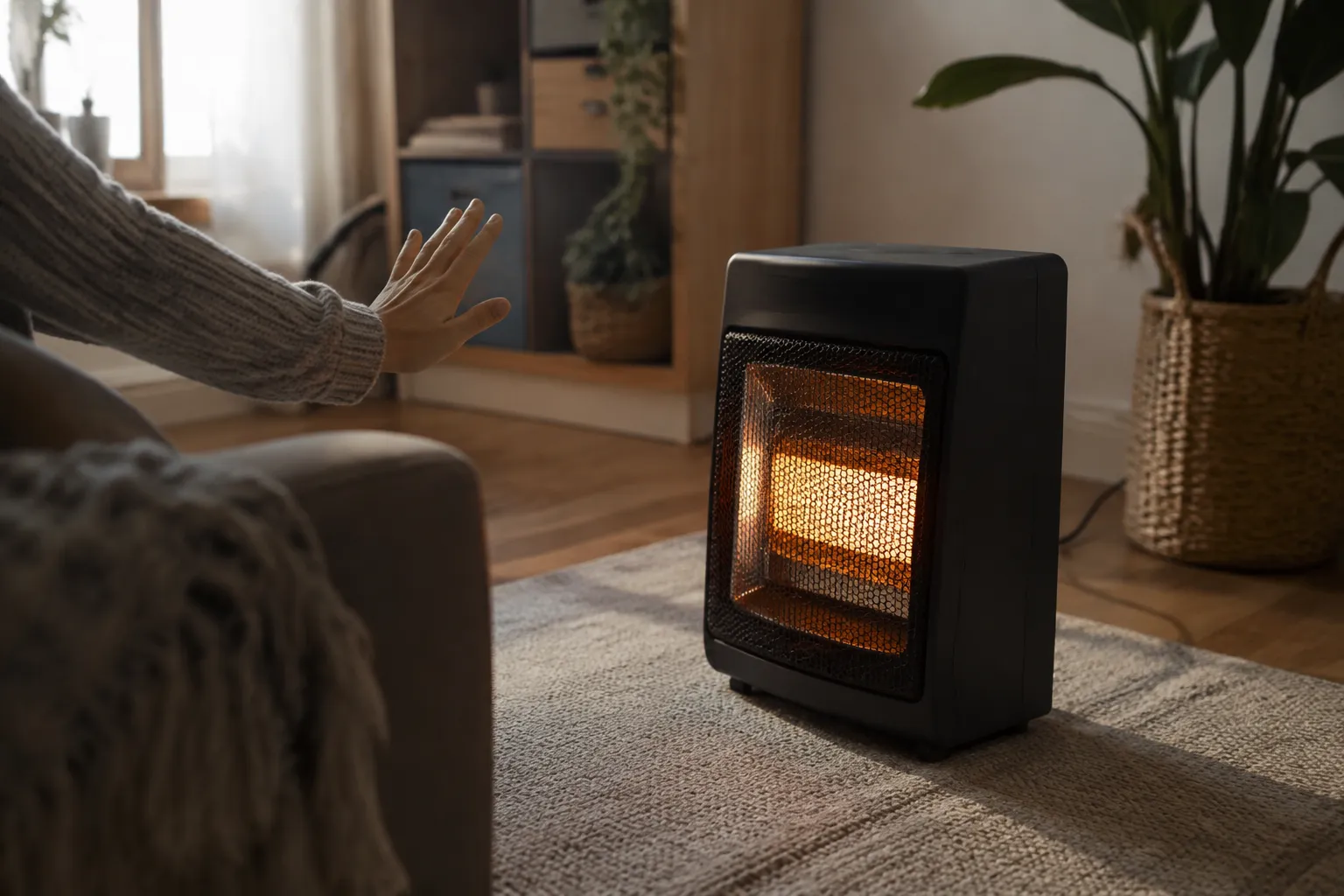
Space heaters occupy a strange place in the American home. They are the only appliance most people own that they half-expect to kill them. A toaster does not inspire the same low-grade anxiety. A microwave sits in plain sight for a decade without a second thought. But a space heater gets plugged in come November, runs hot for a few weeks, and then gets exiled to a closet with the same quiet relief that follows the removal of a wasp nest. That instinct is not wrong exactly, but it is aimed at the wrong target. The machines themselves are not the menace. The way people use them is.
The data on residential fires is messy, and anyone who quotes a precise number should be treated with suspicion. What is well established is that heating equipment sits near the top of the list of causes for home fires in cold months, and space heaters specifically account for a large share of those. The overwhelming majority of the deaths and damage involve a specific failure sequence: the heater is placed too close to something that burns, a curtain or a mattress or a pile of laundry, and the something catches. The heater does not explode. It does not malfunction in some exotic way. It just sits there radiating heat into a curtain until the curtain gives up.
That simple fact should reshape the entire conversation. The single most important rule of space heater safety is not about the machine at all. It is about the three feet of empty space around it.
The Three-Foot Circle Is the Whole Game
Every safety organization that has ever weighed in on this subject lands on the same number. Three feet. Keep combustible materials at least three feet from the front, sides, and back of a space heater. The consistency of this guidance across agencies and manufacturers is remarkable, and it suggests the number was not pulled from a hat. It emerged from fire investigations and burn testing. A curtain hanging two feet from a radiant heater can ignite. A pillow at eighteen inches can smolder. Three feet gives enough buffer that the heat dissipates before it reaches anything vulnerable.
People routinely violate this rule within minutes of unpacking a heater. The device gets placed beside a sofa because that is where the outlet is. A throw blanket drapes off the armrest and hangs within a foot of the heating element. The owner walks away, and the physics take over from there.
There is no feature on any consumer heater that makes this rule optional. Ceramic elements, oil-filled radiators, infrared panels, fan-forced units, they all produce enough surface heat to ignite common household materials at close range. The oil-filled radiator looks benign because it does not glow red. Its exterior can still reach temperatures that will char fabric. A person who treats a cool-looking heater as a safe heater has misunderstood the risk.
The easiest way to enforce the rule is to make it physical. Before turning the heater on, take a step back and look at the circle around it. If anything is inside that circle, move the heater or move the thing. This takes eleven seconds. It is the highest-value safety action available to any heater owner, and it is the one most frequently skipped because the heater was already turned on when the laundry basket got set down next to it.
Extension Cords and Power Strips Are the Second Killer
After clearance, the next most common failure involves the electrical supply. Space heaters draw a lot of current. A typical unit pulls somewhere between 1,000 and 1,500 watts, which at 120 volts means roughly 8 to 12.5 amps. A standard household circuit is rated for 15 or 20 amps. That leaves little headroom. Plug a heater into a circuit that is already carrying a few other loads, and the breaker will eventually trip, which is the system working as designed.
The trouble starts when people introduce extension cords or power strips into the chain. Many consumer extension cords, particularly the cheap ones sold in drugstores, are rated for 13 amps or less. A 1,500-watt heater running at full tilt pushes right against that ceiling, and the cord heats up. The insulation softens. The plug gets warm to the touch. In a worst case, the cord melts and arcs, which is a fire starting point that has nothing to do with the heater's own safety features.
The rule is simple and absolute: plug a space heater directly into a wall outlet. No extension cord. No power strip. No adapter. If the outlet is behind a piece of furniture and the cord will not reach, rearrange the furniture. A person who needs an extension cord for a heater should treat that as a signal that the heater does not belong in that location.
Power strips are arguably worse than extension cords because they invite additional loads. A heater plugged into a power strip that also feeds a lamp and a phone charger and a computer is asking the strip's internal circuitry to handle more than it was designed for. Many power strips are rated for 15 amps total, and a heater alone can consume most of that. The strip becomes a hot spot, and the plastic housing softens over weeks of use.
There is also the question of the outlet itself. A wall outlet that has loosened over the years, the kind where a plug hangs at a slight angle or falls out when brushed, will make poor contact with the heater's prongs. Poor contact means resistance. Resistance means heat. The faceplate gets warm, and the internal contacts degrade further each time the heater runs. A warm outlet is not normal. It is a warning that should be addressed by an electrician, not ignored until the smell of melting plastic appears.
Tip-Over Sensors Work, but They Are Not a Free Pass
Modern heaters come with two automatic shutoff features that are genuinely useful. The first is the tip-over switch. If the unit tilts past a certain angle, it shuts off. The second is the overheat sensor. If the internal temperature climbs too high, usually because the air intake is blocked, the unit shuts off. Both features have prevented real tragedies, and any heater sold without them should not be purchased.
But these features have a side effect that is rarely discussed. They create a false sense of security that leads people to take risks they otherwise would not. A person buys a heater with a tip-over switch and decides that it is safe to run while sleeping. The reasoning goes: if the heater gets knocked over, it will shut off. That logic ignores the fact that the heater can be knocked over by a dog or a child and still come to rest with its hot surface pressed against a carpet or a blanket. The tip-over switch cuts the power, but the metal housing retains heat for a long time afterward. The ignition risk does not end the instant the switch trips.
The overheat sensor has a similar blind spot. It protects against blocked airflow, but it cannot detect the slow accumulation of heat in a curtain that hangs within two feet of the unit. The sensor measures the temperature inside the heater, not the temperature of the materials around it. A heater can be running perfectly within its design parameters while a nearby object is heating toward its ignition point.
The correct mental model is that these features are a last line of defense, not a primary strategy. The primary strategy remains the three-foot circle and direct wall outlet. A person who relies on the tip-over switch while ignoring clearance has inverted the safety hierarchy.
Running a Heater Unattended Is the Decision That Causes the Worst Outcomes
The deadliest space heater fires share a common feature: nobody was in the room when the fire started. The heater runs through the night in a child's bedroom. It gets left on in the living room while the owner runs errands. A fire that starts in an occupied room is usually noticed quickly, and the damage stays limited. A fire that starts in an empty room has minutes to spread before anyone sees smoke.
This is why the guidance about sleeping with a space heater on is so consistent. Every major safety organization advises against it. The reasoning is not that the heater is more likely to fail at night. It is that a fire that starts while everyone is asleep has a much higher chance of becoming fatal. The smoke alarm may sound, but a sleeping household has slower reaction times, and smoke itself can impair judgment before a person is even fully awake.
People resist this rule because cold bedrooms are genuinely unpleasant. The solution is not to run a space heater through the night but to address the cold at the source. A heavier comforter. A fleece blanket layered over the sheets. Warmer pajamas. A heated mattress pad, which operates at low wattage and stays in direct contact with the body rather than heating the whole room. These options are not as dramatic as a glowing heater in the corner, but they do not carry the same risk profile either.
The same logic applies to leaving a heater running while leaving the house. The machine cannot tell the difference between an empty room and an occupied one. It just radiates heat until something around it reaches a critical temperature. The decision to leave it on is a decision to delegate fire safety to a device with no awareness of its surroundings.
The Age, Condition, and Certification of the Unit Itself
Not all heaters are created equal, and age matters more than most people assume. A heater from the 1990s lacks the tip-over switch and overheat sensor that are now standard. Its internal wiring may have brittle insulation. Its power cord may have cracks. The safety features on modern units are not marketing gimmicks; they are the result of decades of incident review and standards development.
Anyone still using a heater that is more than ten years old should replace it. The cost of a new unit, typically between forty and one hundred fifty dollars, is trivial compared to the consequences of an old unit failing. This is not a judgment about the craftsmanship of older machines. It is a recognition that the safety baseline has moved.
Certification labels matter too. A heater that carries a UL, ETL, or CSA mark has been independently tested to recognized standards. Heaters without these marks, often sold through online marketplaces at suspiciously low prices, may have skipped the testing process entirely. The internal wiring may be undersized. The thermal cutoff may be absent. The plastic housing may be a grade that softens at operating temperature. A person who buys an uncertified heater to save twenty dollars has made a bad trade.
Physical condition is the last check. The power cord should be examined along its full length for cracks, fraying, or discoloration. The plug prongs should be straight and snug. The grille and housing should be free of visible damage. Any of these issues means the heater goes in the trash, not back into service for another winter.
Placement Details That Are Easy to Miss
The three-foot rule covers the horizontal clearance, but there are finer points. The heater should sit on a flat, level, non-combustible surface. A hardwood floor is fine. A low-pile carpet is usually acceptable for heaters that are specifically rated for it, but this should be verified in the manual. A thick shag rug is a poor choice. A tabletop placement is only safe if the table is stable and clear of papers, cloth, and other debris, but a floor placement is generally preferable because it puts the heater below the level of most curtains and tablecloths.
Doors and high-traffic paths also matter. A heater placed in a doorway becomes a trip hazard, and a person stumbling into a hot unit can get burned even if the unit does not tip. A heater placed in a hallway where people brush past it with laundry baskets is asking for contact burns. The heater should be placed in a location where it is seen but not touched, out of the natural flow of movement.
Children and pets change the calculus entirely. A toddler reaching toward a glowing heating element will not understand the warning in the manual about burns. The grille on most heaters is not finger-proof. A parent who runs a space heater in a room where a child might be alone should either secure the room or choose a different heating strategy. Wall-mounted heaters exist for this reason, as do baseboard units that sit out of reach. For households with pets, the concern is less about deliberate contact and more about a cat rubbing against the unit and knocking it over or a dog laying its body against the hot surface out of comfort-seeking instinct.
Finally, the heater should never be placed under a desk or inside a closet. The confined space restricts airflow and causes the unit to run hotter than designed. The overheat sensor may trip, which shuts the unit down, but repeated tripping indicates a misuse pattern that will eventually lead to a failure that the sensor cannot catch. Heaters need room to breathe, and that means open space on all sides, not just the front.
The Smoke Alarm Is the Only Thing That Makes Any of This Recoverable
All of these rules reduce the probability of a fire. None of them reduce it to zero. The one device that turns a preventable fire into a survivable one is the smoke alarm in the room. A working smoke alarm provides the earliest possible warning, which is the difference between a small fire that gets extinguished with a fire extinguisher and a large fire that consumes a home.
The alarm battery should be checked twice a year, which aligns conveniently with the clock changes in most regions. The alarm itself should be replaced every ten years, per the manufacturer's date printed on the back. A smoke alarm with a dead battery or an expired sensor is not a safety device. It is a plastic ornament.
Every home should also have a fire extinguisher on each floor, rated for the types of fires common in that space. For a heater fire, the relevant class is ABC, which covers ordinary combustibles, flammable liquids, and electrical fires. The extinguisher should be mounted near an exit, not hidden in a cabinet behind the dishes, so that a person can grab it on the way out if the fire is small enough to fight.
There is one more consideration that rarely gets mentioned. A person who runs a space heater in a bedroom should close the door while sleeping. This is counterintuitive to anyone who wants the heat to circulate, but a closed door slows the spread of fire and smoke if something goes wrong. Fire departments have known for decades that closed doors are one of the strongest protective factors in residential fires. It costs nothing and takes no time, and it works alongside every other rule on this list.
The morning after the first cold snap, millions of people will drag their heaters out of storage and plug them in without a second thought. Most of them will be fine. The ones who are not will share a set of predictable mistakes: too close to something flammable, an extension cord in the chain, a long stretch of unattended operation. None of these mistakes are exotic. None of them require a mechanical failure to become deadly. The rules are boring and repetitive and old, and they work. The three-foot circle, the direct wall outlet, the cold bedroom with a heavier blanket. That is the whole list, and it is more than enough.