
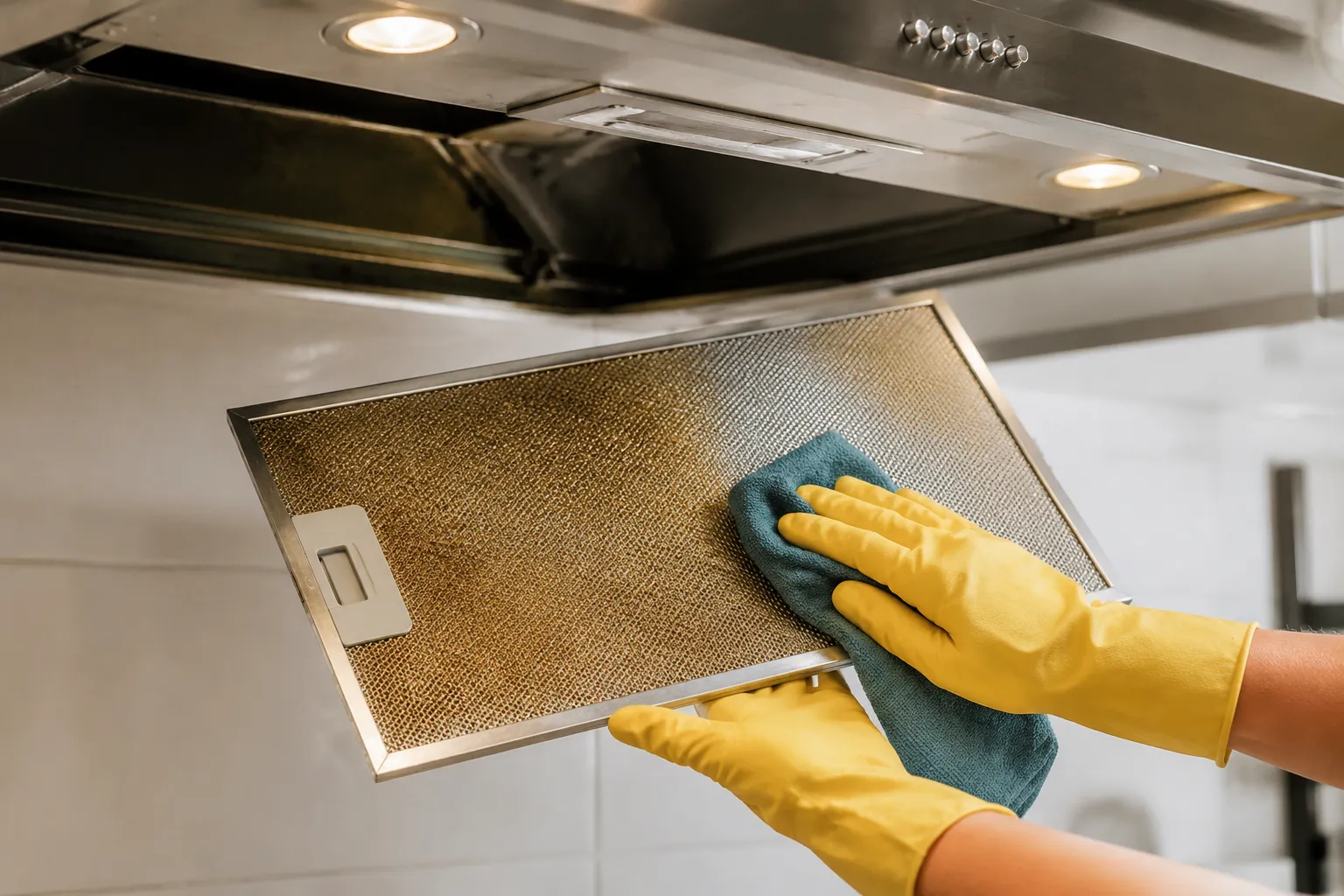
The grease that collects on a range hood filter is a different substance than the grease that splatters across a stovetop. Stovetop grease is fresh, liquid, and mostly surface-level. Filter grease has been baked, polymerized, and re-deposited dozens of times over months of cooking. It is closer to a varnish than an oil. Treating it like ordinary dish grease is the first mistake people make, and it usually does more damage to the filter than the grease itself did.
The stakes are modest but real. A metal mesh filter costs between fifteen and forty dollars to replace. A baffle filter for a commercial-style hood runs higher. Damaging one through aggressive cleaning means buying a new part that could have lasted years. Worse, a filter that gets bent or warped stops catching grease properly, which means the blower wheel and ductwork collect the residue instead. That is a far more expensive problem hiding inside a simple chore.
Why the filter is not the problem
The filter's job is to catch grease before it reaches the fan. That job requires surface area and airflow. The pleats and mesh layers exist to create turbulent paths that force heavier particles out of the air stream. When grease accumulates, it fills those gaps and restricts airflow. A clogged filter makes the hood louder, moves less air, and eventually strains the motor. Cleaning the filter is really about preserving the whole system, not just making the metal look presentable.
People often assume a cleaner-looking filter performs better. That is true up to a point, but there is a difference between clean and stripped. A filter that has been scrubbed down to bare metal with abrasive pads or caustic chemicals will pass air more easily, but it may have lost the very surface texture that encourages grease to cling to it rather than passing through. A little residual oil in the mesh is not failure. It is evidence the filter is doing its job.
The real enemy is not grease itself. It is the mistaken belief that every trace must be removed with force. Careful cleaning preserves the filter's structure and coating. Aggressive cleaning removes the grease and removes the filter's effectiveness along with it.
What actually damages a filter
Three habits account for nearly all filter damage. The first is using high-pressure water, whether from a sprayer at the sink or a pressure washer outside. The second is scrubbing with metal brushes or abrasive pads. The third is soaking in harsh chemical degreasers for extended periods. Each one attacks a different part of the filter, and each can be avoided without much effort.
High-pressure water bends the thin aluminum mesh. The pleats collapse and the frame distorts. Once the mesh is bent, it cannot be unbent cleanly. The filter will sit crooked in its slot, and gaps will form around the edges. Those gaps let grease-laden air bypass the filter entirely and head straight into the blower. A pressure washer might cut through baked-on grease in seconds, but it also turns a fifteen-dollar part into a permanent weak spot in the ventilation system.
Abrasive scrubbing removes the protective coating that manufacturers apply to the mesh. Bare aluminum oxidizes quickly, forming a dull gray film that actually attracts and holds grease more stubbornly than the original surface. The scratches also create microscopic pockets where grease embeds itself and resists future cleaning. Every aggressive scrub makes the next cleaning harder, which encourages more scrubbing. It is a downward cycle that ends with a filter that looks rough and performs worse than a properly maintained one.
Chemical degreasers that are left on too long can pit or discolor aluminum. These products are formulated for metal parts that get rinsed thoroughly, not for thin mesh that holds solution in every crevice. The chemicals keep working after the soaking is done, eating into the metal until the filter is rinsed completely. In extreme cases, the mesh becomes brittle and tears.
The right way to break down baked grease
Heat and time are the two tools that do most of the work. Boiling water alone loosens old grease better than most chemical sprays, because it softens the polymerized residue without attacking the metal. The classic method involves filling a sink or large pot with boiling water, adding a grease-cutting dish soap, and letting the filter soak for twenty to thirty minutes. The water temperature drops as it sits, but the initial heat does the important work of softening the bond between grease and metal.
For a filter that is heavily caked, a longer soak is better than a hotter one. The goal is to let the water penetrate every pleat and dissolve the grease's grip. After soaking, a soft nylon brush or a sponge with a gentle scrub pad will lift the softened residue without scratching. The filter should be rinsed from the back side, meaning the water flows through the filter in the opposite direction of normal airflow. This pushes grease out of the mesh rather than deeper into it.
An alternative for stubborn build-up is a paste made from baking soda and water. Applied to the filter and left for fifteen minutes, it breaks down grease without the caustic action of commercial degreasers. The paste is mildly abrasive, so it should be worked in gently with fingers or a soft cloth rather than scrubbed. Rinsing thoroughly afterward is essential, as dried baking soda leaves a white residue that is annoying to remove once it sets.
Dishwasher risks people ignore
Dishwasher cleaning is the most convenient option, and for many filters it works fine. The heat and detergent combination handles moderate grease well. But it is not a universal solution. The dishwasher's spray jets can bend thin mesh filters, especially if the filter rattles against the rack or another dish. The detergent is also more aggressive than most people realize, and on older filters with worn coatings it can accelerate oxidation.
Filters should go on the top rack, angled so the spray hits them directly. They should not be stacked against other items, and they should never be placed on the bottom rack where the jets are strongest. A filter that comes out of the dishwasher looking cloudy or dull has lost its protective coating. That filter will require hand cleaning from then on, and it will show grease stains faster than before.
One more dishwasher risk: the drying cycle. The prolonged heat exposure can warp thin aluminum frames, especially on budget filters. Opening the dishwasher after the wash cycle and pulling the filter out to air dry avoids that problem entirely. It adds ten seconds of effort and removes the most damaging part of the dishwasher process.
What to do with a badly neglected filter
A filter that has gone a year or more without cleaning may have a thick, tar-like layer that resists boiling water and soap. Tempting as it is to reach for a metal scraper or heavy-duty spray, a better approach exists. The filter can be placed in a plastic bag with a small amount of ammonia and left sealed overnight. The ammonia fumes break down the grease without any scrubbing at all. This method works because the vapor penetrates the mesh more effectively than a liquid soak.
Ammonia requires care. It should be used outside or in a well-ventilated area, away from any source of flame or spark. A person should not inhale the fumes directly, and the filter should be rinsed multiple times after the treatment. The payoff is a filter that releases its built-up grease almost effortlessly, with no abrasion and no chemical damage to the metal.
For filters that have been neglected long enough that the grease has hardened into a brittle crust, a more direct approach works. A plastic putty knife or an old credit card can chip away the thickest layers without scratching the metal underneath. This should be done before any soaking, because a crust on the surface blocks water and soap from reaching the mesh. Once the bulk is removed, the normal soak-and-rinse method handles the rest.
Knowing when to replace instead of clean
There is a point where cleaning stops making sense. A filter with bent pleats, torn mesh, or a frame that no longer sits flush should be replaced. No amount of careful cleaning restores its function. The cost of a new filter is small compared to the price of cleaning the blower wheel and ductwork that a damaged filter lets grease reach.
Another sign of a spent filter is a persistent greasy smell coming from the hood during cooking. That odor indicates grease is accumulating on the fan or in the duct, which means the filter has been letting material pass through. Replacing the filter addresses the symptom but not the underlying buildup. A person who notices this should check the blower wheel for a sticky film and plan a deeper cleaning of the hood interior.
Stainless steel filters are the exception to most of this advice. They are heavier, more durable, and less prone to bending than aluminum mesh. They also cost more. The same gentle cleaning methods work, but stainless can tolerate a bit more scrubbing without damage. Even so, the coating on stainless baffle filters benefits from the same heat-and-soak approach. Aggressive scrubbing eventually dulls the surface there too.
The routine that prevents heavy buildup
Frequency matters more than method. A filter cleaned every four to six weeks never develops the baked-on layer that requires aggressive intervention. At that interval, a quick soak in hot soapy water and a soft rinse removes nearly everything. The job takes fifteen minutes and requires no special products. The filter dries on a dish rack and goes back into the hood the same day.
For people who cook with oil daily, the interval should be shorter. The accumulation happens faster, and a monthly cleaning barely keeps up. A filter that gets consistent attention will last through years of use. A filter that gets cleaned twice a year will need replacement much sooner, and the cost difference is entirely avoidable.
The habit also protects the hood's interior. Grease that never reaches the blower never requires the unpleasant job of cleaning the fan housing. That job involves removing the blower assembly, soaking it in degreaser, and wiping down skin that has collected a layer of sticky residue. It is a miserable afternoon that a regular filter cleaning prevents.
Water temperature and drying matter
The simplest upgrade to a cleaning routine is hotter water. Tap water from the sink often is not hot enough to soften grease quickly, which leads people to scrub harder than necessary. A kettle of boiling water poured over the filter in a sink filled with hot water and dish soap makes an immediate difference. The grease softens within minutes instead of resisting.
Drying is the step that gets skipped, and it causes its own problems. A filter stored while still damp develops water spots and, over time, corrosion along the edges. Air drying on a rack overnight is sufficient. A clean filter should be completely dry before being returned to the hood, because the combination of residual moisture and fresh cooking grease creates a tacky film that is harder to remove later.
The frame of the filter is the part most likely to corrode from trapped water. The mesh drains easily, but the folded edges hold moisture. Wiping the frame with a dry cloth before air drying cuts the corrosion risk significantly. It is a small gesture that extends the filter's usable life by months.
The coating conversation most people miss
Many range hood filters come with a non-stick or anti-corrosion coating from the factory. That coating is the reason grease releases relatively easily in the first months of use. Once the coating degrades, the metal surface grabs grease and resists release. Preserving that coating is the quiet objective of all gentle cleaning methods.
Abrasive pads, metal scrapers, and harsh chemicals strip the coating in one or two cleanings. After that, the filter becomes more work to clean for the rest of its life. The owners who complain that their filter is always greasy are often the same people who scrubbed it clean with steel wool during the first month of ownership. The filter did not change; its surface did.
New filters are inexpensive enough that replacing one every few years makes sense. But a filter well cared for, cleaned with heat and soap and soft brushes only, will easily last that long. The coating is the difference between a chore that takes minutes and one that takes a bottle of degreaser and a stiff brush. Protecting it is the whole game.
The grease will keep coming, every meal, every roast, every pan of fried onions. The filter is built to catch it. The only question is whether that grease gets removed gently and often, or whether it gets baked on and then scraped off. One path keeps the metal intact and the airflow strong. The other path leads to a warped, scratched, leaking filter and a blower wheel that spins through a layer of old cooking residue. The boil, the soak, the soft brush, the rinse from the back. That is the entire method. It is not exciting, but it works, and it keeps working long after the shortcuts have cost more than they saved.