
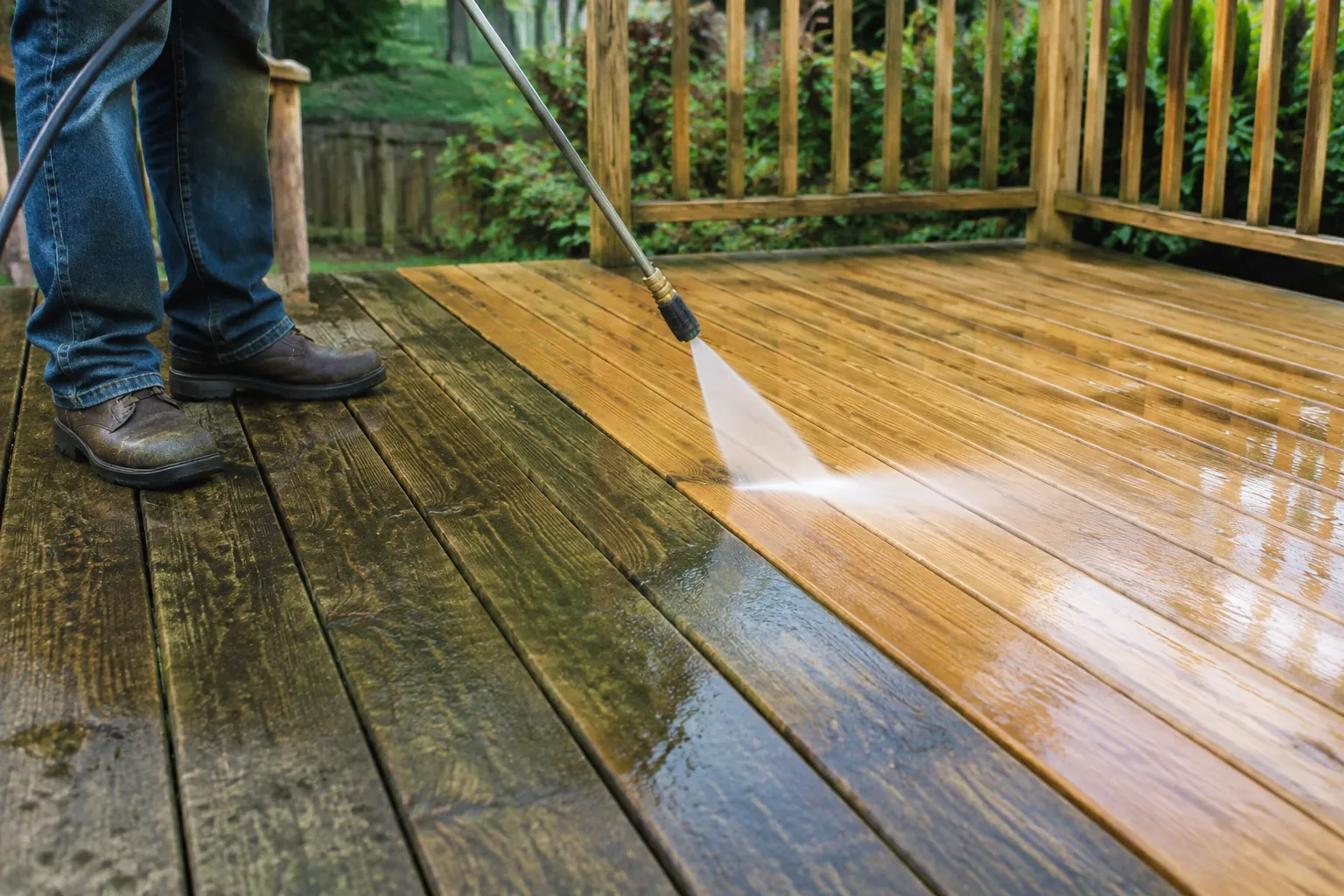
The first mistake most people make with a pressure washer and a wood deck is believing the machine is the problem. It is not. The problem is that a pressure washer is a tool designed to remove things, and a deck is a collection of things that do not want to be removed. The wood itself, the soft grain between the summer rings, the splinters raised by a winter of freeze and thaw, the thin layer of oxidized gray that forms on any exposed board: all of it is vulnerable. A machine that can strip paint off concrete at 3,000 psi will strip the lignin right out of a cedar plank at half that distance. The trick is understanding that deck prep is not about aiming a wand at dirt. It is about convincing the wood to let go of the grime without letting go of itself.
That distinction matters more than the brand of washer, the nozzle color, or the detergent. Every spring, homeowners wheel out a rented unit, set the nozzle to a tight fan, and proceed to blast years of mildew and pollen off the surface. What they actually do is carve shallow trenches into every soft grain line, raise the fuzzy grain across the whole floor, and leave a surface that will need twice as much stain to cover and will shed that stain twice as fast. The wood looks cleaner for about a week. Then it looks worse than before, because the damaged surface holds moisture unevenly and the sun burns the high spots into a patchwork of light and dark.
The honest starting point is to admit what the washer is for. It is for removing the loose stuff: the blobs of dried sap, the crusted bird droppings, the gray oxidized film that no broom can move. It is not for removing every trace of color from the wood. A deck that comes out looking brand new, like fresh lumber from the yard, has been over-washed. That bright, raw look is the look of exposed cellulose, and it is the fastest way to guarantee that the next coat of stain lasts half as long as it should. The goal is a surface that is clean enough to accept a finish, not a surface that has been stripped down to the bone.
The Nozzle Math That Decides the Outcome
The nozzle is the entire game. A pressure washer delivers the same gallons per minute regardless of the tip, but the tip changes the force per square inch dramatically. A 0-degree nozzle, the pencil-thin stream, will cut a groove into a pine board from three feet away. A 40-degree nozzle, the widest fan most machines offer, spreads that same force across a broad band and drops the effective pressure to a fraction of the rating. For wood, the 40-degree tip is the only sensible choice. The 25-degree tip is for concrete and brick. The 15-degree tip is for stripping paint off siding. The 0-degree tip is for engraving, and nothing else.
Distance does the rest. The pressure at the surface drops with the square of the distance from the nozzle, so moving the wand from six inches to twelve inches away reduces the force by roughly a factor of four. This is the single most useful fact in deck washing, and almost nobody uses it. Instead of adjusting the machine, adjust the standoff. Hold the wand at a distance where the fan visibly loses its edge and the water starts to feel like a hard rain rather than a knife. For most machines, that is somewhere between twelve and eighteen inches. The surface should look damp and slightly lighter, not blasted and slick.
Keep the wand moving. A stationary blast, even at a safe distance, will eventually erode the soft grain. Work in long, overlapping passes that follow the direction of the boards, not across them. Going with the grain lets the water push the crud out of the low spots instead of driving it deeper. Going across the grain is how the fuzzy, rough texture appears, the one that feels like sandpaper under bare feet and drinks stain like a sponge.
Reading the Wood Before Turning It On
Different woods take pressure differently, and the label on the lumber yard receipt matters more than the settings on the washer. Cedar and redwood are soft, open-grained, and forgiving in some ways but fragile in others. They resist rot naturally, but their surface fibers tear away easily under pressure. Southern yellow pine, commonly used for pressure-treated framing and decking, is denser and harder, but it has wide summer growth rings that are much softer than the winter rings between them. A tight blast will carve those soft bands out, leaving a ridged surface that holds water in the troughs. Ipe and other tropical hardwoods are so dense that a consumer washer at full pressure barely dents them, but they are oily, and the oil can interfere with water-based cleaners and stains.
The age of the deck changes the equation too. A deck built last summer has tight, intact surface fibers and a factory smoothness. It needs little more than a rinse and a light pass with the wand. A deck that has gone fifteen years without a stain has a deep gray, weathered surface that looks like it needs aggressive treatment. That gray layer is actually a protective oxidation, and removing all of it exposes fresh wood that will weather again just as fast. The right move is to remove the gray evenly, not to chase the wood down to its original color. A uniform, light tan surface, like the inside of a walnut shell, is the target.
Inspect for damage before the water ever touches a board. A rotted section, a split plank, a popped nail head, a board that flexes underfoot: all of these need attention first. Washing a deck with failing boards is like washing a car with a dent in the door. The dirt comes off, and the damage becomes more obvious. More importantly, a pressure washer will exploit any weakness. A split will widen, a popped nail will spray water into the joist below, a soft spot will open into a hole. Replace or secure the bad boards, then wash.
The Case for a Little Chemical Help
Cleaners are not a crutch. They are the difference between a wash that works with the wood and a wash that fights it. A dedicated deck cleaner, usually a sodium percarbonate or oxalic acid based product, breaks down the organic film of mildew, pollen, and oxidized lignin that plain water cannot touch. Applied with a pump sprayer and given ten to fifteen minutes to work, it lifts the grime to the surface where the washer can simply rinse it away. The pressure needed drops from "strip paint" to "garden hose with attitude." That reduction in pressure is what saves the wood.
Bleach is the shortcut that ruins decks. A homeowner sees a green patch of mildew and reaches for the jug of chlorine bleach, because bleach kills mold on a shower wall and the logic seems to transfer. It does not. Chlorine bleach destroys the lignin that binds wood fibers together, and it leaves behind a salt residue that pulls moisture into the board. The result is a deck that looks clean for a month and then turns fuzzy, gray, and brittle. The mildew comes back faster because the surface is rougher. Oxygen bleaches, the kind sold in deck cleaner jugs, do the same work without the destruction. They foam, they fizz, they break down into water and oxygen, and they are safe for the wood and for whatever plants are within splash range.
The cleaning sequence matters. Wet the deck lightly first so the cleaner does not dry out before it works. Apply the cleaner in sections, working from the far end toward the exit, so a person never has to walk across a wet, soapy surface. Let it sit, but not so long that it dries into a white powder. Then rinse with the wide fan, again working with the grain. The wash water should run off the deck looking brown and dirty. If it runs off looking like tea, the cleaner is pulling tannins out of the wood, which is a sign that the dwell time was too long or the concentration was too high.
The Final Rinse and the Drying Window
The rinse pass is where most of the damage happens, because it is the longest pass. A person rinsing a 400 square foot deck will stand there for twenty minutes, and fatigue sets in. The wand drifts closer, the angle steepens, and the water starts to cut little channels. Fight this by dividing the deck into small sections, twelve by twelve feet at most, and treating each section as its own job. Rinse it, look at it, move on. The last section should get the same attention as the first.
After the rinse, the wood needs time to dry before any stain or sealer goes on. This is not a detail. A stain applied to wood with more than about twelve to fifteen percent moisture content will not penetrate properly. It will sit on the surface, form a film, and then peel within a season. The common advice is to wait two to three days of warm, dry weather. A better rule is to wait until the surface feels dry to the touch and the color has lightened to an even, pale tone across the whole deck. A moisture meter, sold for about the price of a bag of deck stain, removes the guesswork entirely. It is worth owning if the deck is worth staining.
There is a particular mistake that shows up in the drying window. A person washes the deck on Saturday, the sun comes out on Sunday, and by Sunday afternoon the deck looks dry and pale. They grab the stain can and get to work. The problem is that the surface dries faster than the interior. The top sixteenth of an inch feels dry while the wood below it still holds the wash water. The stain goes on, the sun bakes it, and the water trapped below turns to vapor and pushes the stain off in little bubbles. The fix is patience, or a moisture meter. The cost of waiting two extra days is nothing. The cost of recoating a failed stain job is a full weekend and a second bottle of stripper.
What the Pressure Washer Cannot Fix
A pressure washer removes dirt, and that is nearly the whole of its power. It will not remove a water stain that has soaked deep into the grain. It will not brighten a deck that has been roasted by five summers of direct sun. It will not repair the dark blotches left by rusted furniture legs or potted plants. These require a brightener, typically oxalic acid, applied after the wash and rinsed off. The brightener works chemically, not mechanically, and it is the difference between a deck that looks clean and a deck that looks restored.
It also will not kill mildew at the roots. The washer rinses the visible black spots off the surface, but the hyphae, the threadlike structure of the fungus, often remain embedded in the wood grain. They will regrow, usually within weeks, if the deck is not treated with a mildewcide. Most quality deck stains contain one, which is another reason to stain promptly. A deck that is washed and then left bare through a rainy month will look worse by fall than it did before the wash.
The final limit is the one nobody wants to hear. A pressure washer, no matter how careful the operator, cannot restore a deck that was neglected for two decades. The surface is gone. The soft grain is deeply eroded, the boards are splintering at the ends, and the nails are working loose. Washing this deck is like polishing a pair of shoes with holes in the soles. The work that matters is replacement, not cleaning. A homeowner who recognizes this before renting the washer saves a day of labor and the rental fee.
The Sequence That Works
The whole process, done properly, has a rhythm. First, clear the deck completely. Furniture, planters, grills, rugs, all of it. Sweep twice, because a single pine needle under the wand will leave a streak. Second, replace or secure any damaged boards. Third, apply the deck cleaner with a pump sprayer, working in sections. Fourth, rinse with the wide nozzle, keeping the wand moving and the distance generous. Fifth, let the deck dry completely, which takes two to four days in normal weather. Sixth, apply the stain or sealer. That is the entire job.
The order is not optional. Applying cleaner to a dirty deck without sweeping just makes mud. Rinsing before the cleaner has time to work just wastes the chemical. Staining before the wood dries just creates a peeling mess. Each step depends on the one before it, and skipping any of them produces a result that looks fine for a month and then fails.
One more thing sits inside that sequence, and it is the part that separates a good deck prep from a great one. The pressure washer is not the hero of this story. It is a tool for delivering water at a controlled force, and the control is the entire skill. A person who washes a deck with a garden hose and a stiff brush, using a good cleaner and waiting for the wood to dry, will get a better result than a person with a 3,500 psi machine and no patience. The machine makes the job faster. The judgment makes it right.
The measure of a good wash is not how white the wood looks when it dries. It is how well the stain adheres next season, and the season after that. A deck that was washed with restraint will take a coat of penetrating stain and hold it for three full summers. The washed-out boards, stripped to bare cellulose, will soak up the first coat and shed the second one within a year. The difference is invisible on the day of the wash. It shows up in the spring, when one deck looks as good as the day it was finished and the other needs another wash, another dry-out, and another can of stain.
That is the real argument for treating the wood gently. It is not about being precious or cautious. It is about understanding that a deck is a structure with a lifespan, and every aggressive wash shortens that lifespan. The boards are not a canvas to be scrubbed clean. They are a surface to be maintained, and the maintenance is a cycle: clean, dry, protect, walk on, repeat. The pressure washer sits inside that cycle as a tool, nothing more. Used right, it is the fastest way through the cycle. Used wrong, it accelerates the part of the cycle where boards get replaced.
The last board on the deck, the one nearest the house, gets the most abuse. It catches the runoff from the roof, the splashes from the downspout, the traffic from the door. It is also the board most likely to rot first, because it stays damp longest. When washing a deck, give that board extra attention, not in pressure but in care. Clean it, let it dry, and stain it thoroughly. The rest of the deck will follow the same path, and the whole floor will last a few seasons longer. That is the whole point of prep, stated plainly. It is not about making the wood look newer. It is about making it last.