
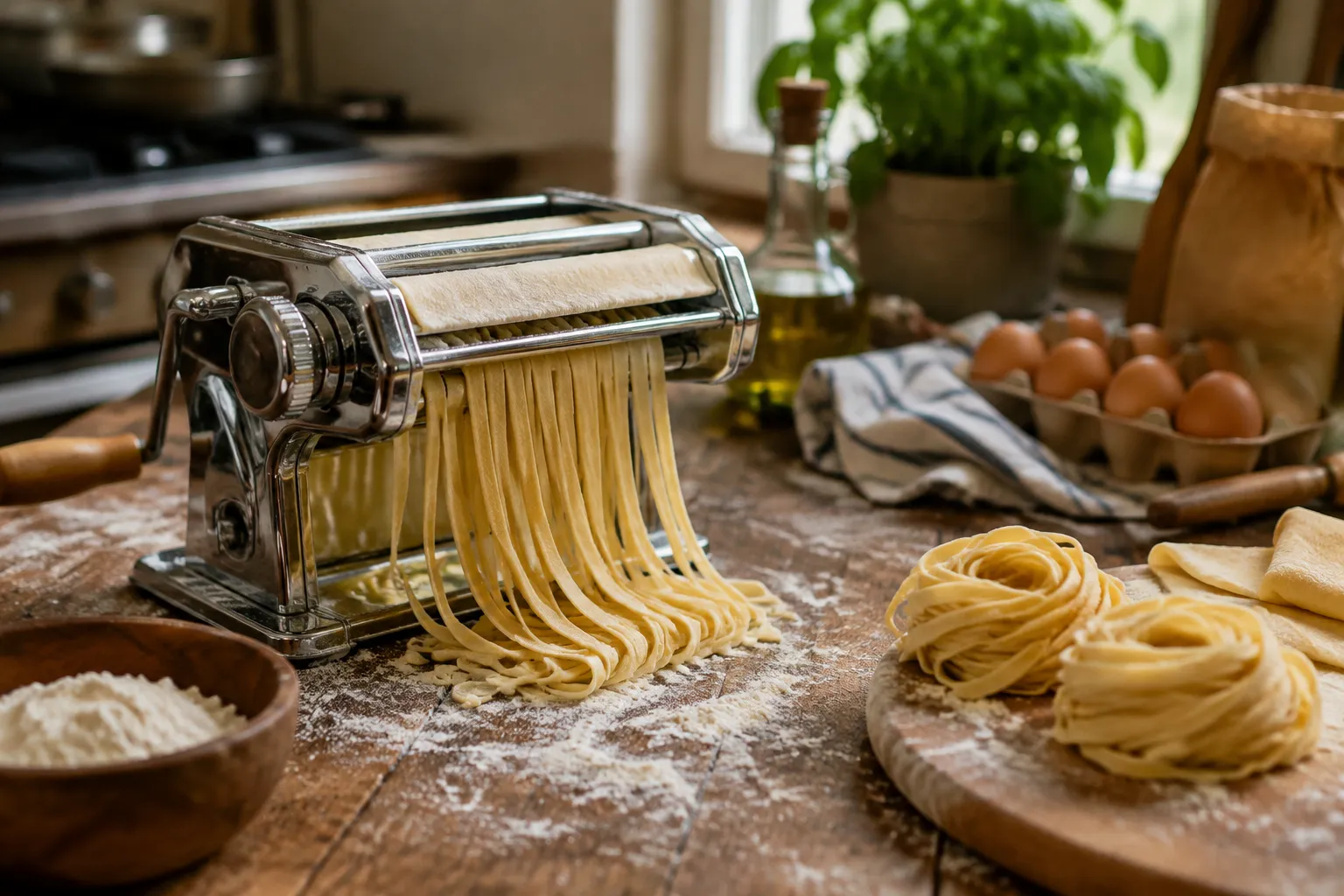
The first mistake most people make with a pasta maker is treating it like a kitchen appliance. It is not an appliance. An appliance gets switched on, does a job, and gets switched off. A pasta maker is a tool, closer to a good chef's knife or a cast iron pan, and it demands a little something from the person using it. The machine does not make pasta. It rolls and cuts dough that a person has already made, and the quality of that dough determines everything that follows. This distinction, appliance versus tool, is the whole game.
A person can buy a sixty-dollar hand crank machine and produce noodles that embarrass a two-hundred-dollar electric model, provided that person understands hydration, rest, and technique. The reverse is also true. The most expensive machine on the market will turn a badly mixed, under-kneaded dough into sad, crumbling ribbons. The machine is not the magic. The hands are the magic. The machine just does what it is told.
The Dough Is the Real Project
Before any metal roller touches flour, the dough has to be right. The classic ratio is one egg per hundred grams of flour, roughly, but that number only works as a starting point. Flour varies by brand, by season, by the humidity in the room. A dry day in winter pulls more water out of the dough than a muggy August afternoon. The person making pasta has to feel the difference and adjust.
The goal is a dough that is firm but supple, like a fresh ball of Play-Doh that has been warmed in the palm. It should not stick to the fingers. It should not crack at the edges when pressed. If it crumbles, add a teaspoon of water and knead again. If it feels tacky and leaves residue on the counter, dust it with flour and keep going. This adjustment phase is where most beginners panic, because the dough looks wrong and the instinct is to add more liquid or more flour in big, careless handfuls. Small corrections are the answer. A teaspoon at a time, kneading thoroughly between each addition.
The resting period matters more than most people believe. A freshly kneaded ball of pasta dough is tight and elastic. Rolling it immediately is a fight. That same dough, wrapped in plastic and left on the counter for thirty minutes, relaxes into something cooperative. The gluten settles. The flour fully hydrates. The difference is dramatic enough that a person who skips the rest and a person who honors it are making two different dishes.
Choosing Between Hand Crank and Electric
The hand crank machine is the honest starting point. A solid one, like the classic Marcato Atlas, costs around seventy dollars and will outlive the cook. It clamps to the counter, has rollers that widen or narrow by turning a small knob, and cuts sheets into fettuccine or tagliatelle. The crank requires one hand, which leaves the other hand free to guide the dough as it emerges. That guiding hand is essential. The dough needs gentle tension as it passes through the rollers, not a hard pull, just enough support to keep it from folding or stretching unevenly.
The electric machines, which are really just the same roller mechanism with a motor attached, cost three to four times more and save about fifteen minutes of cranking for a full batch. That is the entire advantage. The motor does not roll the dough better. It does not cut cleaner. It just turns the handle so a person does not have to. For someone making pasta once a week for a family, the hand crank is the better purchase. The money saved buys better flour, better eggs, maybe a proper rolling pin for the initial flattening.
For a person hosting dinner parties or making pasta every single week, the electric version earns its place. The forearms do not tire, and the rhythm stays steady through several batches. But the electric machine has a downside beyond the price. It runs fast. A hand crank moves at the speed of the hand, which naturally stays slow and controlled. The electric motor pushes the sheet through quickly, and a beginner can lose control of the dough, ending up with wavy, uneven sheets that are harder to handle. The motor asks for a steadier hand, not the other way around.
The Rolling Sequence and the Dusting Discipline
The standard approach is to start at the widest roller setting and pass the dough through, then fold it, flatten it by hand, and pass it through again. This repeated folding and re-rolling is what builds the sheet's strength and gives fresh pasta its pleasant bite. After two or three passes at the widest setting, the sheet narrows by one number on the dial and gets passed through again without folding. Each pass makes the sheet thinner and longer. The process continues until the sheet reaches the desired thickness, usually setting six or seven on most machines, thin enough to see the shadow of a hand held behind it.
Dusting is the discipline that separates clean pasta from sticky chaos. A light sprinkle of flour on the dough before each pass keeps it from adhering to the rollers. Too much flour makes the sheet dry and chalky. Too little causes sticking and tearing. The right amount is a fine, even dusting, just enough to feel like the surface of a freshly floured pastry board. When the sheet comes out of the rollers, it should feel smooth and slightly silky, not rough or tacky.
Long sheets are easier to manage if they are cut in half before the final thinning passes. A sheet that stretches to three feet long is unwieldy, prone to folding onto itself and sticking. Cutting it into two shorter sections makes the last few passes far more controllable. This is a small habit that saves a lot of frustration.
Cutting Shapes and What Each One Demands
The cutting attachment is where the machine either shines or reveals its cheapness. A good machine has sharp, precisely aligned cutters that produce clean, even strands. A poor machine has dull blades that crush the dough, leaving ragged edges and strands that stick together. The difference is audible. A clean cut makes a soft, crisp sound. A dull cutter makes a squashing noise, and the resulting pasta looks frayed at the edges.
Fettuccine, the wider noodle, is the easiest cut for beginners because the strands are thick enough to handle without tearing. Tagliatelle, slightly narrower, follows closely behind. Spaghetti, the thinnest common cut, requires the dough to be rolled slightly thinner and handled with more care, since the delicate strands tear easily. For a first attempt, fettuccine is the forgiving choice.
After cutting, the strands need to be fluffed immediately, lifted and separated with the fingers so they do not clump. A light dusting of flour and a gentle tossing motion, the same move used for a salad, keeps them separate until cooking. A pasta drying rack helps, but a clean kitchen towel dusted with flour works just as well for a batch that will be cooked within the hour.
The Egg Question and the Water Question
Most home pasta makers default to egg dough, and with good reason. Eggs add richness, color, and a tender bite. But the egg question changes the texture of the final noodle in a way that matters for the sauce. A pasta made with more yolks than whites is richer and more luxurious, closer to what a restaurant serves. A pasta made with whole eggs is sturdier, more workmanlike. A pasta made with no eggs at all, just flour and water, is a completely different dish, the kind served in southern Italy with simple tomato sauce, and it requires a different rolling technique because the dough is stiffer and less forgiving.
The water question is about the cooking pot. Fresh pasta cooks quickly, usually in two to three minutes, and it needs room to move. A small pot crowds the noodles, drops the water temperature, and produces gummy, stuck-together strands. A large pot with vigorously boiling, heavily salted water is non-negotiable. The salt should make the water taste like the sea. Fresh pasta absorbs salt readily, and unsalted water yields bland noodles no matter how good the dough was.
Storing the Fresh Batch
Fresh pasta does not keep like the dried boxed kind. It is moist, perishable, and at its best within a few hours of rolling. For the occasional weekend cook, the practical move is to make exactly what the meal needs and not chase leftovers. But a batch can be dried for later use by laying the strands in loose nests on a floured tray and leaving them at room temperature for several hours until brittle. Once fully dry, the nests transfer to an airtight container and keep for a month. Dried fresh pasta cooks longer than fresh, closer to four or five minutes, but the flavor is still a step above most commercial boxes.
The alternative is freezing. Fresh pasta freezes well if the nests are placed on a baking sheet, frozen solid, then bagged. Frozen pasta goes straight into boiling water without thawing and cooks in about the same time as fresh. This is the strategy for a person who wants to make a big batch on a Sunday and eat well on a busy Tuesday.
The First Weekend Attempt
The first attempt should be humble. A simple dough, a single batch, fettuccine, and a sauce that does not compete with the pasta. Brown butter and sage, or a light tomato sauce, or just good olive oil, garlic, and pecorino. The point is to taste the noodle itself and learn what fresh pasta actually tastes like, because it is a revelation for most people. The texture is soft but with a real bite, nothing like the uniform chew of dried pasta. The egg flavor comes through, rich and slightly sweet. It is a different food entirely.
The second attempt should add a variable. Maybe a different flour, a blend of all-purpose and semolina. Maybe a filling, like a simple ricotta and spinach ravioli, which teaches shaping and sealing. The third attempt should be the ambitious one, the tagliatelle with a slow ragù, the dish that takes an afternoon and feels like an event.
This progression matters because the skill builds on itself. The person who masters the simple fettuccine understands the dough's behavior, the feel of the rollers, the rhythm of the process. That foundation makes the harder shapes and filled pastas manageable. The person who skips straight to lobster ravioli on the first try usually ends up frustrated, with a sticky mess and a machine that needs a deep cleaning.
Cleaning Without Fear
The machines look intimidating to clean, with their metal rollers and narrow cutter heads, but the maintenance is simpler than most people assume. The machine should never go in water. The rollers are not dishwasher safe, and submerging them risks rust and damage to the bearings. Instead, a dry pastry brush or a stiff dry toothbrush sweeps the flour and dough residue from the rollers and cutters after each use. A small wooden skewer or toothpick clears any stubborn bits caught in the cutter teeth. The whole process takes three minutes and keeps the machine ready for the next batch.
A light wipe of the exterior with a dry cloth is all the cleaning the body needs. The metal rollers, if they develop a dull film over time, can be polished occasionally with a tiny drop of food-grade mineral oil on a paper towel, then cranked through a piece of scrap dough to remove the excess. This keeps the rolling surface smooth and prevents sticking.
Worth the Counter Space
The pasta maker takes up room, requires a learning curve, and asks for a few dozen practice runs before the results turn genuinely impressive. A box of dried spaghetti from the supermarket costs a dollar and cooks in nine minutes. The fresh stuff takes an hour from start to table. The gap between those two experiences is the reason the machine exists and the reason it stays on the counter instead of being shoved into a cabinet.
The weekend dinner that comes out of a pasta maker is not just dinner. It is the afternoon spent at the counter, the flour dust in the air, the feel of the crank turning, the first bite of a noodle that tastes like egg and wheat and nothing else. That is a particular kind of satisfaction, and it does not come out of a box.