
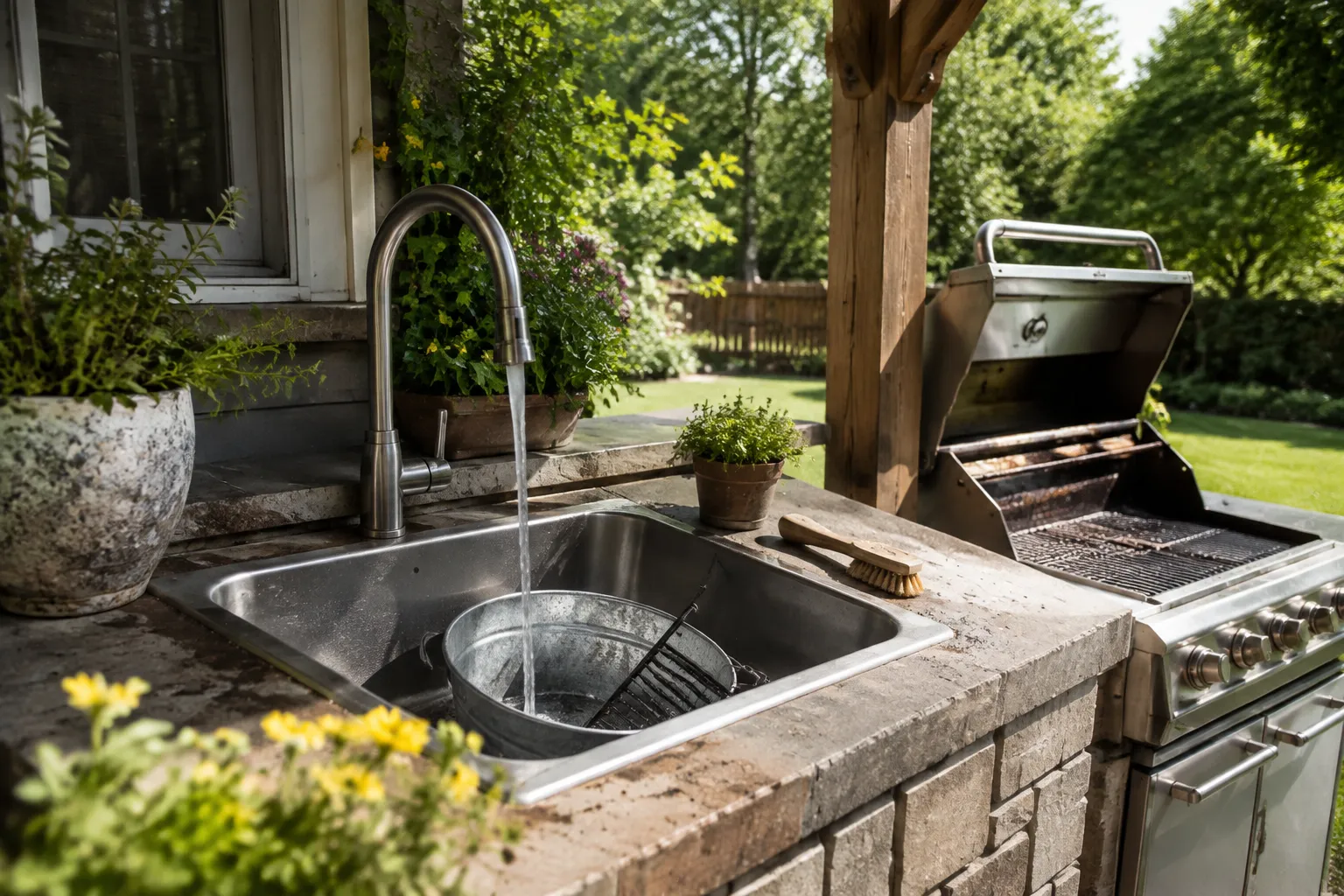
Outdoor sinks occupy a strange category in home improvement. Most people who garden or grill seriously have thought about installing one at least once, usually while tracking mud through the kitchen or balancing a greasy grill grate over the indoor sink. Then the thought passes, because an outdoor sink sounds like a luxury item, something that belongs on a television backyard makeover. The reality is more practical than that. A basic outdoor sink is a utility fixture, closer to a workbench with running water than to a status symbol. It changes how often a person uses the garden and how much mess makes it into the house.
The first thing to settle is what the sink is for. Garden work means soil, sap, and chemical residue. Grill cleanup means grease, carbonized meat scrapings, and ash. These are different messes that require different water temperatures and different disposal considerations. A single outdoor sink can serve both purposes, but only if the setup accounts for the differences. Soil and plant matter can go down most drains without issue. Grease, on the other hand, solidifies as it cools and will eventually clog a drain pipe that is not designed for it. The 100-foot run of PVC pipe from the outdoor sink to the main house line is a prime spot for grease buildup. This is the problem most people discover only after the water starts backing up.
Before buying anything, a person should assess the water source and the drainage path. The water supply is usually the easier half. A hose bib on the exterior wall of the house provides cold water, which is fine for rinsing vegetables and washing hands but inadequate for cutting grease on grill parts. Hot water changes the entire usefulness of the sink. People are far more likely to actually clean the grill after every use when they do not have to boil a kettle indoors and carry it outside. Running a hot water line to an exterior wall is a modest plumbing job for a professional, and it makes the sink a genuine tool instead of a decorative feature. Without hot water, an outdoor sink becomes a glorified hose spigot.
The drainage question is where installations stall. Some properties have a floor drain or a laundry sink hookup that makes the connection easy. Most do not. The common workaround is a dry well or a French drain, which disperses the water into the surrounding soil. This works fine for handwashing and rinsing produce. It is a poor choice for grill grease, which coats the gravel and soil over time and eventually creates a smelly, contaminated patch of ground near the house. A better approach for grill washdown is a dedicated grease trap. These come in a range of sizes and prices, from small under-sink units to larger outdoor-rated models. The trap catches the fat before it ever reaches the drain line, and the collected grease gets disposed of with the trash.
For anyone who wants one sink that handles both jobs, the honest recommendation is a two-basin setup. They are not much more expensive than a single large basin, and they solve the worst problem of outdoor cleanup, which is cross-contamination. One basin gets used exclusively for garden produce and handwashing. The other is the dirty basin, reserved for grill parts and tools. Each side can have its own drain configuration. The garden side sends water to the dry well. The grill side connects to a grease trap and then to the drain line. This is more plumbing work than a single-basin installation, but it is the difference between a sink that works forever and a sink that works until the first greasy clog.
Sink Materials That Survive the Weather
Indoor sinks are not built for the outdoors. The enamel finishes chip. The porcelain stains. The standard chrome faucet corrodes within a season in most climates. The material choice is the decision that determines how long the sink stays functional. Stainless steel is the obvious frontrunner, and it deserves the position, but not every stainless steel is equal. The cheap restaurant-supply models that cost under 100 dollars use thin 22-gauge steel that dents if a cast iron pan slips. A good outdoor-grade stainless sink uses 16-gauge steel, which resists dents and stands up to temperature swings. The finish matters too. Brushed finishes hide scratches better than polished ones, and for good reason, because scratches on a sink are inevitable in this kind of use.
Composite materials have become a serious alternative in the last few years. These are typically a blend of resin and stone dust, molded into sink basins. They handle sunlight better than plastic and resist staining better than porcelain. The tradeoff is weight. A composite sink large enough for grill parts is heavy, often 40 to 60 pounds, and it needs a sturdier cabinet or frame than a lighter stainless model. The resilience of composites to heat is the most relevant feature for grill cleanup. A hot grate set down in the basin will not crack or discolor a quality composite, while a thin stainless sink can warp if a very hot piece sits on it for too long.
One material should be avoided entirely, and that is plastic. The cheap plastic utility sinks sold at hardware stores are fine for the mildest duty, rinsing a few tomatoes or washing hands after planting. They do not last. Sunlight degrades the plastic, making it brittle and prone to cracking. The inevitable scrape of a metal tool leaves permanent white marks. The sink warps under hot water. It feels like a temporary fix, because it is one. A person who installs a plastic outdoor sink will replace it within two or three years. The replacement cost plus the labor of swapping the basin makes the original savings disappear.
The faucet is the component that fails first in outdoor installations. Freezing temperatures are the main culprit. A standard indoor faucet traps water in the valve, and when that water freezes, it expands and cracks the internal cartridge. The solution is a frost-proof sillcock, which has a long stem that shuts the water off deep inside the wall where the temperature stays above freezing. This works for a basic cold-water setup. For hot water, the options are more limited. A frost-proof faucet with a hot water line is not standard, so most installations use a standard faucet with shutoff valves on both lines inside the house. The homeowner must drain the lines in the fall, or install a faucet with a built-in anti-freeze design. Skipping this step is how a person ends up replacing a faucet every spring.
The Cabinet and Countertop Question
An outdoor sink needs a cabinet, but the cabinet needs to be built for the environment. The typical indoor vanity cabinet, made of particleboard with a melamine finish, will swell and delaminate within a year of exposure to rain, humidity, and outdoor temperature swings. The two durable choices are stainless steel cabinets and weather-treated wood. Stainless is the better option for anyone who wants the sink to look presentable after five years. The price is steep, often double the cost of the sink itself, and the cabinet takes a certain aesthetic commitment. A stainless cabinet next to a wooden deck looks like commercial kitchen equipment, which is fine if that is the style of the space.
Weather-treated wood cabinets are the more common approach because they can be built to match existing deck or fence staining. The key is using materials that actually resist rot, not just materials painted with a waterproof seal. Cedar and teak are the traditional choices. A well-built cedar cabinet with proper joinery and a high-quality outdoor finish will last a decade or more. The finish needs annual maintenance, which is a real commitment. A person who does not want to re-stain every spring should choose stainless and be done with it.
The countertop around the sink gets less attention than it deserves. This surface is where a hot grill grate will be set, where a muddy trowel will rest, and where a basket of just-harvested peppers will sit. The material needs to handle heat, moisture, and staining. Stainless steel counters are the professional choice and the easiest to clean. Concrete countertops are heavy and need sealing, but they handle heat extremely well and can be cast in place. Tile is a poor choice because the grout lines trap dirt and grease. The right call for most people is a butcher block counter made of teak or ipe, both of which resist moisture well and do not scorch easily. The wood offers a softer surface than steel, so dropped glass items are less likely to shatter, and the natural grain pattern hides the inevitable scratches.
Filtration and Diverter Valves
One of the quiet design wins in outdoor sinks is the addition of a simple diverter valve system. Many homes have a single exterior hose bib near the garden area. The natural assumption is that the sink must be plumbed to that bib, which puts the sink in a location dictated by the existing plumbing rather than by convenience. A diverter valve on the bib solves this. The valve connects to the bib on one end and has two outlets, one for the sink and one for the garden hose. Turning a lever switches the water flow between the two. This costs about 30 dollars and installs in five minutes. It means the sink can live in the same general area as the hose without making the hose unusable.
Garden work generates a specific kind of debris that clogs sink drains. Fine soil particles, leaf fragments, and small roots wash off produce and tools and settle in the drain trap. A strainer basket catches the large pieces, but the fines still pass through and accumulate. The fix is a simple inline sediment filter on the sink's drain line, similar to a washing machine lint trap. These are inexpensive, easy to clean, and prevent the slow flow that turns an outdoor sink into a frustrating experience. A person should budget for a strainer and a sediment filter from the start. Installing them at the time of the sink build is much easier than retrofitting later.
The water supply itself benefits from a filter when the sink is used for washing garden produce. A basic carbon block filter installed on the supply line removes chlorine and improves the taste of the water used for rinsing vegetables. Municipal water typically contains chlorine at levels that are safe to drink, but the taste affects the produce. A person who has ever bitten into a freshly rinsed tomato that tastes like a swimming pool understands why this matters. The filter adds cost and a replaceable cartridge, but for anyone who eats what they grow, it is the difference between a sink that washes vegetables and a sink that makes them taste worse.
Lighting and Weather Cover
Outdoor sinks get the most use during the early evening, after work, when the sun is low or gone. This is the time of day when a person wants to clean up after grilling dinner or wash a few handfuls of greens before making a salad. Without adequate lighting, the sink becomes a hazard. A single motion-activated LED floodlight mounted above the sink basin solves this problem completely. The light turns on when a person approaches, shuts off automatically, and eliminates the need to fumble for a switch with wet hands. The unit is inexpensive, easy to wire outdoors, and should be specified as part of the initial installation rather than as an afterthought.
The other essential is a weather cover for the sink itself. A sink that sits exposed to rain collects leaves, debris, and standing water, which defeats the purpose of a clean outdoor workspace. The cover options range from a simple fitted cloth cover that straps over the basin to a hinged wooden or metal lid that closes flush with the countertop. The hinged lid is the superior choice. It protects the basin, doubles as additional counter space when closed, and keeps the sink area looking tidy between uses. A cloth cover is cheaper but blows off in wind, traps moisture against the basin, and needs washing. The hinged lid costs more and requires careful hinges that do not corrode, but a person who installs one will never go back to the cloth version.
The Griddle and Wash Station Combo
Many people who invest in an outdoor sink are also investing in an outdoor cooking setup, and that combination opens the door to a more ambitious build. A sink placed adjacent to a built-in grill or outdoor kitchen island creates a genuine cooking and cleaning station. The cook does not carry anything indoors. The vegetables get processed at the sink and carried directly to the grill. The cooked food gets served. The grill gets scraped and washed on the spot. The entire meal cycle happens in one location, and the kitchen inside stays clean. This is the setup that most people are imagining when they first think about an outdoor sink.
The integration with a grill raises the drainage stakes. A grill generates a significant volume of greasy water during a thorough cleaning. The grease trap becomes essential, and the trap needs to be sized to the actual volume of use. A small under-sink trap rated for light duty will fill up after two or three serious grill cleanings. A larger trap, rated for commercial use, costs more but needs emptying only a few times per season. The larger trap also handles the occasional event, like a party where the grill runs all day and the sink sees constant use.
The sink becomes the natural place for the ancillary gear that outdoor cooking creates. A built-in soap dispenser mounted on the counter or in the sink deck keeps hand soap accessible. A heavy-duty scraper with a wooden handle hangs on a hook near the sink. A small drying rack sits on the countertop to hold freshly washed tools. These small additions turn the sink from a single fixture into the organizing center of the outdoor cooking area. The people who get the most from an outdoor sink are the ones who treat it as the hub of the outdoor kitchen, not just as a place to rinse a few things.
Winterization Routines
An outdoor sink in a cold climate is a seasonal fixture, and the end-of-season shutdown is not optional. The routine is straightforward and takes about ten minutes. The supply lines are shut off at the interior valves. The faucet is opened to drain the water in the stem. The trap underneath the sink is removed and emptied, because the water in the P-trap will freeze and crack the fitting. The sediment filter cartridge is removed and stored indoors, since the filter housing can crack if water freezes inside it. The grease trap is emptied and cleaned. The whole system is then left open, with all valves in the open position, so any residual moisture can evaporate rather than pool and freeze.
Spring startup is the mirror image. The drain components are reinstalled, the supply valves are opened slowly to check for leaks at every joint, and the system is flushed for a few minutes before any produce or grill parts go near it. A person who follows this routine will get years of service from the fixtures. A person who skips it will learn the hard way why frost-free faucets exist. The winterization is not glamorous, but it is the difference between a sink that lasts and a sink that needs repairs every spring.
The final consideration is siting. The sink should be placed within a few steps of both the garden and the grill, on the prevailing downwind side so cooking smoke does not blow into the person working at the sink. It should have a clear path for the drain line, preferably with a direct run and minimal turns. And it should be visible from the kitchen window, because a sink that is out of sight will be out of use. Those four conditions matter more than any single fixture choice. A sink that is convenient, warm, well-lit, and properly plumbed becomes a permanent part of the outdoor routine. A sink that fails on any of those counts becomes a curiosity that guests admire and the homeowner ignores.