
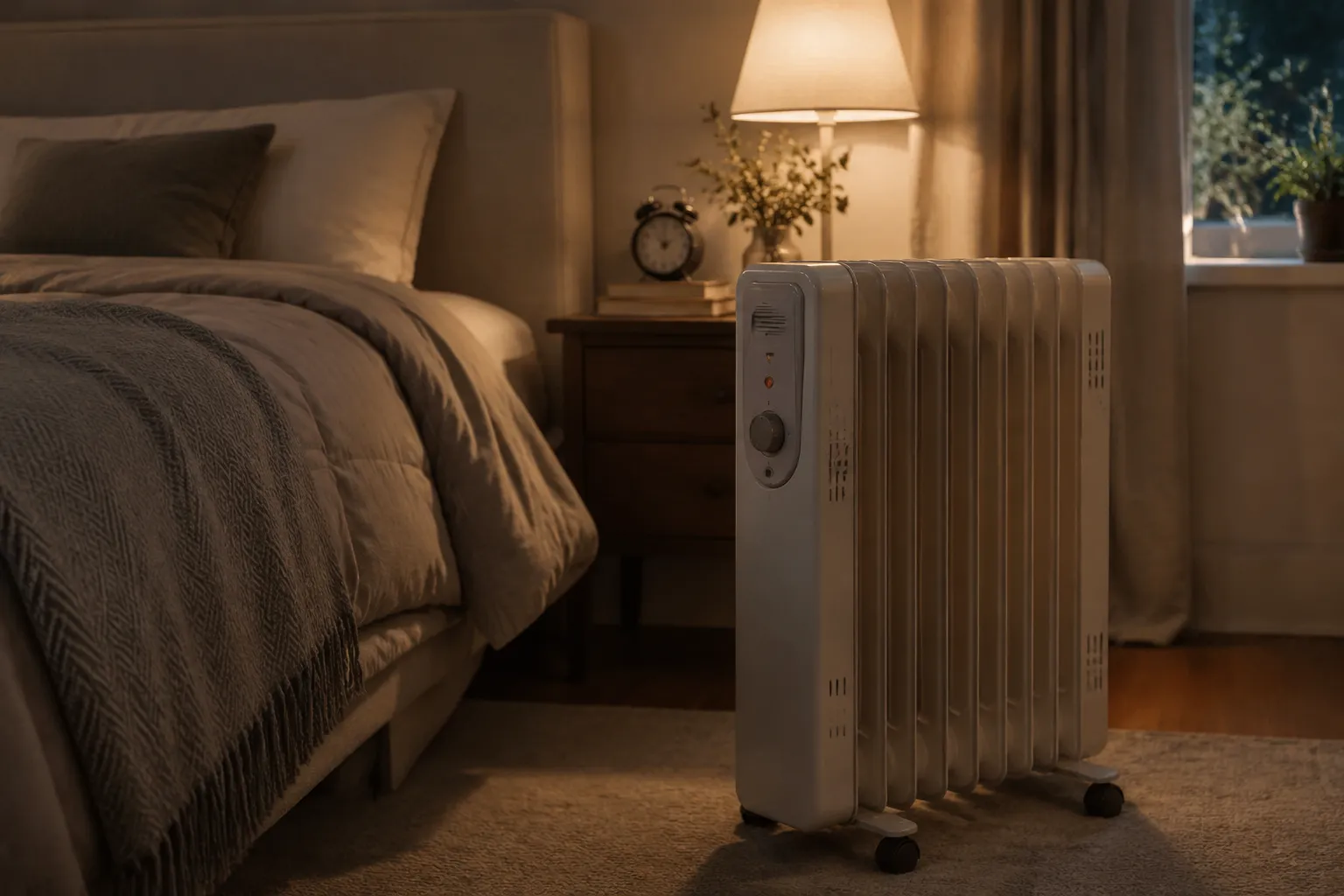
Bedrooms are the one room in a house where people routinely make the worst heating decisions. A space heater with a glowing element and a fan sits two feet from a duvet, and everyone quietly accepts the arrangement because the alternative is sleeping in a cold room. An oil-filled radiator solves most of that problem, but only if a person treats it like the piece of thermal equipment it is, not like a lamp that happens to blow warm air.
These radiators are heavy, slow, and almost silent. They heat oil inside a sealed metal column, the oil transfers heat to the steel, and the steel radiates it into the room. There is no exposed heating element, no fan, no flame. The surface gets hot enough to burn skin, but it does not get hot enough to ignite a cotton sheet that falls against it under normal conditions. That single distinction is why they are the sensible choice for a bedroom, and it is also why people get careless with them.
The rules for using one safely at night are not complicated, but they are specific. Most of them come down to understanding what the radiator can and cannot do, and where the real risks sit.
Placement is the entire game
An oil-filled radiator needs clearance on every side. The commonly repeated advice is three feet from anything flammable, and that number is worth taking literally. Curtains are the biggest hazard because people hang them close to windows, and windows are exactly where a radiator gets placed to fight a draft. A floor-length curtain blowing against a hot column during the night is the classic accident scenario. The radiator will not burst into flames on contact, but it can get hot enough to singe fabric and eventually ignite it if the contact is sustained.
Bed skirts and low-hanging blankets are the second hazard. The bottom of a radiator sits close to the floor, and the columns radiate heat downward as well as outward. A bed skirt that drapes within an inch of the unit is a slow burn waiting to happen. The bed itself should be at least a foot away, not because the bed is especially flammable, but because a person moves in sleep. Arms and legs end up in odd places. A foot pushing a blanket against a hot radiator at 3 a.m. produces a burn, not a fire, but a burn in the middle of the night is a miserable event.
Furniture placement matters more than people think. A wooden dresser or nightstand within a few inches of the radiator will dry out and discolor over a season, and the wood can eventually char. The radiator does not need to touch the furniture for this to happen. Radiant heat does the work on its own. Keeping everything at least a foot away from the unit solves most of these problems and turns the radiator into a safe object instead of a hazard waiting for a gust of wind.
The cord is the weakest link
The electrical cord on an oil-filled radiator is thick and rubbery, and it lulls people into treating it like an extension of the wall. It is not. The cord is a genuine fire risk, often the highest one in the setup, because it runs across floors and under furniture and gets stepped on for years without anyone inspecting it.
The cord should plug directly into a wall outlet. Extension cords and power strips are forbidden territory for these units, not because the manufacturer wants to sell more outlets, but because a radiator draws a steady, high current for hours. A cheap extension cord or an overloaded power strip can heat up internally and melt, and that failure happens inside a wall cavity or under a bed, where nobody sees it until smoke appears.
If the only available outlet is behind the bed, move the radiator, not the cord. Running a cord under a rug or across a walkway is the other common failure. The pressure of footsteps on a cord gradually damages the internal wiring, and the damage is invisible from the outside. A cord that feels warm to the touch while the radiator runs is a sign of trouble, and the unit should be unplugged and replaced.
One detail people miss: the plug itself. The plug on a quality oil-filled radiator has a reset button because the unit includes a ground-fault circuit interrupter or a thermal cutoff. That button should be tested at the start of each season by pressing it and confirming the radiator shuts off. The test takes ten seconds, and it verifies that the safety mechanism actually works before the unit is trusted overnight.
Heat settings are a timing decision
The thermostat dial on an oil-filled radiator does not work like a fan heater's dial. A fan heater blows air until the room reaches the target temperature and then clicks off. An oil-filled radiator heats its oil, radiates heat, and the thermostat controls when the oil reheats. The response time is slow, which means the dial setting determines not just the final temperature but how long the room takes to get there.
The practical consequence is that the radiator should be turned on a full hour before bedtime, not when a person gets into bed. Someone who crawls under the covers and then switches on the radiator will spend the first hour of sleep in a cold room while the unit slowly warms up. The radiator will eventually bring the room to temperature, but the comfort curve is backwards. The heat arrives when the body is already deep asleep and no longer notices.
The better approach is to run the radiator on medium heat for the hour before bed, then turn it down to low or its minimum setting for the night. The oil holds heat for a long time after the unit cycles off, so the room stays warm without the radiator working hard while everyone sleeps. This also cuts the electrical draw significantly, because the radiator is not cycling on and off at high wattage all night.
High heat is for daytime use. Running a radiator at maximum in a bedroom overnight is unnecessary, and it produces a room that is too warm to sleep in, which leads people to crack a window, which then makes the radiator work even harder. The whole cycle is wasteful. A bedroom radiator should be set low enough that the unit cycles off for stretches at a time.
The surface is hot, and that is not a design flaw
The exterior of an oil-filled radiator reaches temperatures of 200 degrees or more on high settings. That is hot enough to cause a serious burn on contact, and it stays hot long after the unit is switched off. The cooling period after unplugging can take thirty minutes to an hour, which means a radiator that looks off can still injure someone who touches it.
This is the reason these units are risky in households with small children or pets, not because of fire but because of contact. A toddler reaching out to touch a hot column is a trip to urgent care. A cat jumping onto the top of the unit to get warm can singe its paw pads. The manufacturers sell covers for this purpose, but a simpler solution is to keep the radiator in a spot that is not a natural walkway or play area, and to treat the surface as permanently hazardous all winter.
The other side of this is that the heat is gentle in a way that fan heaters are not. There is no blast of dry air, no dust burning off a heating element, no noise. The room warms evenly, and the air does not get that parched, throat-scratching quality that forced-air heat produces. For someone who sleeps with the radiator on low, the difference is noticeable by morning. A person wakes up without the dry mouth and stuffy nose that come from a night of fan-forced heat.
Tilt switches and why they matter
Most modern oil-filled radiators have a tilt switch, also called a tip-over switch, that shuts the unit off if it is knocked over. This is a genuine safety feature, and it should be tested by tipping the radiator gently while it is running. The unit should click off within a couple of seconds of tilting past a certain angle.
The catch is that the switch is mechanical, and mechanical things fail. A radiator that has been bumped around in storage, dropped during a move, or had its base bent can have a tilt switch that no longer engages properly. The test takes five seconds and catches most of these failures. A radiator that does not shut off when tipped is not safe to use, period.
The base itself deserves a look. The wheels on an oil-filled radiator are small and plastic, and they are not meant for daily rolling around the room. The recommended approach is to place the radiator where it will live for the season and leave it there. Moving it while hot is a burn risk, and rolling it across carpet can catch the cord or tip the unit. The wheels are for positioning during setup, not for a daily dance around the bedroom.
Dust is a slow-burning problem
An oil-filled radiator gets dusty. The fins and columns are a natural collection point for the lint and dust that float around every bedroom, and the heat bakes that dust onto the surface. A thick layer of dust acts as an insulator, which makes the radiator work harder and run hotter, and it produces that faint burning smell that shows up when the unit first turns on for the season.
The solution is a dusting at the start of the season and another one mid-winter. A dry microfiber cloth or a vacuum with a brush attachment handles most of it. The unit should be unplugged and completely cool before cleaning, and no water or liquid cleaner should touch the electrical components. The control panel and plug area get a dry wipe, nothing more.
That burning smell on first use is worth understanding. It is dust and manufacturing residue burning off the surface, and it usually fades within twenty minutes. If the smell persists after the first hour, or if it reappears every time the radiator cycles on, the unit should be unplugged and inspected. A persistent burning smell is not normal operation.
The oil is sealed, and that is the whole point
Oil-filled radiators are sealed units. The oil inside is not a fuel, and it does not get consumed or topped up. It is a heat-transfer medium, and it stays inside the steel columns for the life of the unit. A leak is a sign that the radiator is done. There is no repair, no refill, no DIY fix. Oil leaking from a radiator means the steel has cracked or a seam has failed, and the unit needs to be replaced.
This sealed design is what makes the radiator safe for overnight use. There is no exposed element, no combustion, no fuel line. The oil never reaches a temperature where it can ignite, and even if the radiator is knocked over, the oil stays sealed inside the columns. The risk profile is fundamentally different from a kerosene heater or a gas appliance.
The trade-off is weight. A typical bedroom-sized oil-filled radiator weighs thirty to forty pounds, and the larger models push sixty. That weight is the price of the safety. Someone who wants a lightweight, portable heater is buying a different category of device with a different risk profile. An oil-filled radiator is not a grab-and-go appliance. It is a seasonal fixture that gets placed once and left alone.
Overnight use comes down to one habit
The single most effective safety habit for a bedroom radiator is also the simplest: check the room before sleep. A quick scan that confirms the radiator is a foot away from the bed, the curtains are clear of the columns, the cord is not under the rug, and the surface is not covered with a towel or a sweater that a person draped over it while getting ready for bed. That scan takes fifteen seconds, and it catches the majority of dangerous setups.
People cover radiators with damp clothes to dry them, and oil-filled radiators are slow enough that the clothes sit on the hot surface for a long time. A damp towel on a 200-degree surface dries, then heats, then scorches. This is one of the most common real-world mistakes, and it happens in bedrooms because people are drying socks or pajamas while they get ready for sleep, then forget the item is there.
A radiator that is properly placed, set to low, and left alone all night is a genuinely safe appliance. A radiator that is treated as a drying rack, a nightstand, or a general-purpose heat source is a hazard. The object does not change. The behavior does.
The last thing worth knowing is that a quality oil-filled radiator lasts for many years. The sealed oil, the steel columns, the simple controls, there is not much to break. A unit cared for and dusted will heat bedrooms for a decade or more. The ones that fail early are the ones that get knocked over, run on high for months, or plugged into a fraying cord. The radiator is a patient machine. It rewards the same patience in return.