
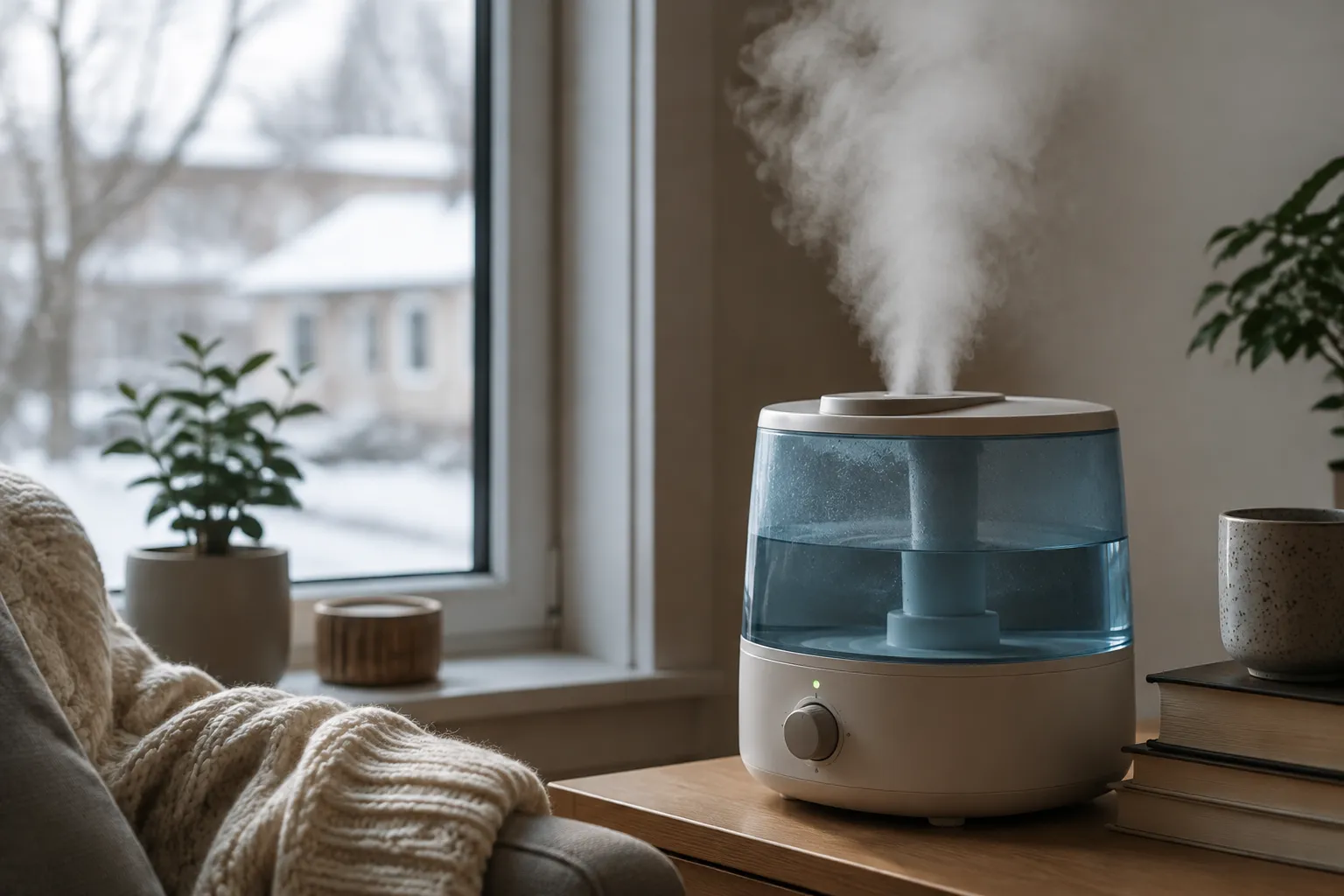
Dry winter air does not announce itself politely. It shows up as a crackle when a person pulls off a wool sweater, a streak of blood on a white pillowcase from a split lip, a houseplant with leaves that curl like fingers clutching something. The humidity in a heated home in January can drop to 10 or 15 percent, which is drier than the Sahara on most days. The human body notices. Skin tightens, throats rasp, and the fine hairs inside the nose stop doing their silent filtering job the way they should. A humidifier is the standard answer, but buying one and plugging it in is only the first few minutes of a longer relationship.
The machines themselves are simple. They put water vapor into the air until the room reaches a reasonable level, usually 30 to 50 percent relative humidity. The trouble is that people treat them like a toaster: set it, forget it, wonder why things went wrong. A humidifier is closer to a houseplant with mechanical parts. It needs regular attention, the right water, and a willingness to clean things that have started to smell like a swamp. Done properly, it changes the whole feel of a winter home. Done lazily, it turns into a science experiment that sprays fine white dust or worse.
The Two Main Kinds and the Trade-Offs
Walk into any hardware store in November and the humidifier aisle splits into two camps. Evaporative units use a wick and a fan. They are self-regulating in a rough way, because the air can only absorb so much moisture, and they are forgiving about mineral content. The wick catches a lot of the calcium and magnesium that otherwise ends up as white dust on furniture. The downside is the wick. It gets crusty, it gets smelly, and it needs replacing every couple of months depending on water hardness.
Ultrasonic units vibrate water into a fine mist and blow it into the room. They are quieter than most evaporative fans and use less electricity. They also do absolutely nothing to filter minerals. Tap water goes in, and a fine white film settles on dark tables, on the television screen, on the leaves of the fiddle-leaf fig. The fine particles are not dangerous for most people, but they are annoying, and they make the air feel different in a way that is hard to describe. Some ultrasonic models include a demineralization cartridge, and those cartridges are exactly as expensive and hard to find as one might expect.
For a bedroom, the choice often comes down to noise. Evaporative units make a low fan hum that some people find soothing and others find maddening. Ultrasonic units are barely audible, just a soft hiss of mist. But the ultrasonic unit demands distilled water if the tap water is hard, and hauling gallon jugs up the stairs in winter is a chore that wears thin by February. A person has to decide which failure mode is more tolerable: replacing a wick every few months or buying distilled water every week.
Placement Beats Power
The single biggest mistake is buying a unit rated for a whole house and parking it in the corner of one room, then wondering why the bedroom still feels like a desert. Humidifiers work locally. They put moisture into the air near them, and that air slowly drifts. A large unit in a hallway does little for a bedroom at the end of a long corridor. The machine needs to be in the room where people actually spend time, ideally the bedroom, because that is where the body does its recovering at night.
Placement inside the room matters too. A humidifier shoved against the wall behind the nightstand will dampen that one patch of wall and leave the rest of the room dry. The mist or fan output needs clearance, at least a foot or two of open space on all sides. It should sit on a flat surface, not on a carpet, where the wicking action can draw moisture into the floor. Furniture makers have seen the watermark rings on nightstands and dressers. A small waterproof mat under the unit prevents a lot of regret.
There is also a question of elevation. A unit on the floor struggles to distribute moisture upward evenly, especially in a room with baseboard heat. Setting it on a sturdy table or dresser at waist height puts the mist where a person actually breathes. That seems like a small thing until the first morning without a raw throat.
Tap Water Versus Distilled
The water question comes up every single winter, and the answer is boring and practical. If a person has soft tap water, it works fine in most evaporative units. The wick will still get mineral buildup, but it will last longer and the dust problem stays minimal. If the tap water is hard, and hard is often a matter of visible scale on the kettle, then distilled water is the honest answer for ultrasonic units. The white dust is not just a cosmetic issue. It settles into the machine's internal parts and shortens its life.
Boiling tap water does not soften it. The minerals do not vanish with heat; they concentrate as the water evaporates. A person who boils water and lets it cool before filling the tank is just adding an extra step and a hot pot to the kitchen. Filtration pitchers like those with carbon filters reduce some impurities but do not remove dissolved minerals to the level that an ultrasonic unit needs. Distilled water is the only honest shortcut, and it costs a few dollars a week depending on tank size.
For those who refuse the ongoing cost, a good evaporative unit with a quality wick is the workaround. It trades a recurring water bill for a recurring wick bill, and the trade is roughly even. The difference is that wicks are easier to find on a Sunday afternoon than distilled water in some small towns.
The Cleanliness Routine Nobody Wants
Here is where the relationship gets serious. A humidifier that sits with standing water for days becomes a breeding ground for mold and bacteria. The mist from a dirty unit can carry those organisms into the air, and that is a real health issue for children, the elderly, and anyone with asthma. The standard guidance is to empty and dry the tank every day and do a deeper clean with vinegar or a diluted disinfectant every few days. Most people do none of that.
The daily routine can be made easier with a simple habit. Refill the tank in the morning instead of the evening. That way the unit runs all day, the water is fresh at night, and the remaining water is dumped and the tank left open to dry during the day when nobody needs the humidity. It takes two minutes. The vinegar soak every third day removes the pink film that forms on tank walls, that slimy sign of biofilm that means cleaning was overdue.
The filters and wicks need the same honesty. A wick that has turned brown and crusty is not working at capacity. That means the air is not getting the moisture, and the fan is just spinning against a clogged sponge. The instructions say replace every one to three months. The real timing depends on use and water quality, but a dirty wick is the most common reason a humidifier quietly stops doing its job.
Humidity Measurement Is Not Optional
Running a humidifier without a hygrometer is like driving a car without a speedometer. The machine does not know the room's humidity level unless it has a built-in sensor, and many budget units just run at a fixed output until the tank is empty. A room can overshoot past 60 percent, and that is when condensation starts streaming down the windows, the walls feel damp, and mold finds a new home in the corners of the closet.
A simple digital hygrometer with a thermometer costs a few dollars and takes one minute to set up. The sweet spot for winter is between 30 and 50 percent. Below 30 feels dry. Above 50 risks condensation on cold surfaces, especially single-pane windows. In very cold climates, keeping the level closer to 30 or 35 percent is advisable, because the bigger the temperature difference between inside and outside, the more likely moisture will condense on windows and in wall cavities.
The hygrometer also reveals a hidden truth: the room's humidity level changes through the day. Cooking dinner, taking a shower, and even breathing all add moisture. A fixed-output humidifier that was perfect at noon might push the room past the dew point by 9 p.m. A unit with a built-in humidistat that shuts off at a set level is worth the extra money, especially for anyone who wants to set it and actually forget it.
The Cold Weather Exception
There is a particular danger in freezing climates that rarely gets mentioned in the marketing copy. In a house with poor insulation or single-pane windows, indoor humidity at 40 percent can cause condensation on the inside of the glass. That water runs down, pools on the sill, and seeps into the wood. Over a week, the paint bubbles. Over a winter, the frame starts to rot. In extreme cold, that condensation can freeze and cause real structural damage.
The fix is not to abandon humidification but to moderate it. Below freezing outside, aim for the lower end of the range, around 30 percent. Below 10 degrees Fahrenheit, keep it at 25 percent or even lower if the windows show persistent condensation. A well-insulated modern house can handle higher levels, but an older drafty home is a different story. The hygrometer and a close eye on the windows are the only reliable guides.
The other cold weather problem is the humidifier itself. Units placed near a cold window or in an unheated sunroom will work poorly, because the cold air holds less moisture and the mist condenses on the glass almost immediately. The unit needs to be in the warm living space, not the cold margin of the house.
When the Humidifier Stops Being the Answer
A humidifier addresses indoor dryness, but it does not fix a house that is leaking air. If a home feels parched no matter how long the unit runs, the issue might be excessive ventilation. A tightly sealed modern home holds moisture well. An older home with gaps around windows, doors, and outlets will exchange that moist air for dry outdoor air constantly. The humidifier is then trying to fill a bathtub with the drain open.
Draft-proofing does more for winter comfort than any appliance. A roll of weatherstripping, some outlet gaskets, and a door sweep cost less than a mid-range humidifier and do not require weekly cleaning. The best approach is both: seal the leaks, then run a properly maintained humidifier to maintain the level. The machine runs less often, the wick lasts longer, and the energy bill drops because the house holds its heat better.
There is also the matter of household habits. A person who cooks with lids on, dries clothes on a line in the basement, and leaves the bathroom fan running for an hour after a shower is actively removing moisture. The humidifier is working against those habits. Simple changes, like hanging wet towels to dry in a spare room or leaving the bathroom door open after a shower, add humidity back into the house in a way that costs nothing.
The Simple Daily Ritual Worth Keeping
The whole practice of winter humidification comes down to a short daily sequence. Fill the tank with fresh water or distilled if needed. Check the hygrometer reading. Wipe down the unit's exterior and any visible moisture. Empty it in the morning and let it dry. Every third day, a quick vinegar rinse. Once a month, a new wick or a cleaned filter. That is about ten minutes a week in total, and it is the entire difference between a machine that works and a machine that causes more problems than it solves.
The reward is not dramatic. It is waking up without the headache that comes from breathing dry air all night. It is the houseplants holding their green color into February. It is the wood floor that does not creak as much underfoot. And it is the small moment when the cold air rushes in during a quick trip outside for firewood, and the warm, humid air of the house feels genuinely comfortable, not just less cold.