
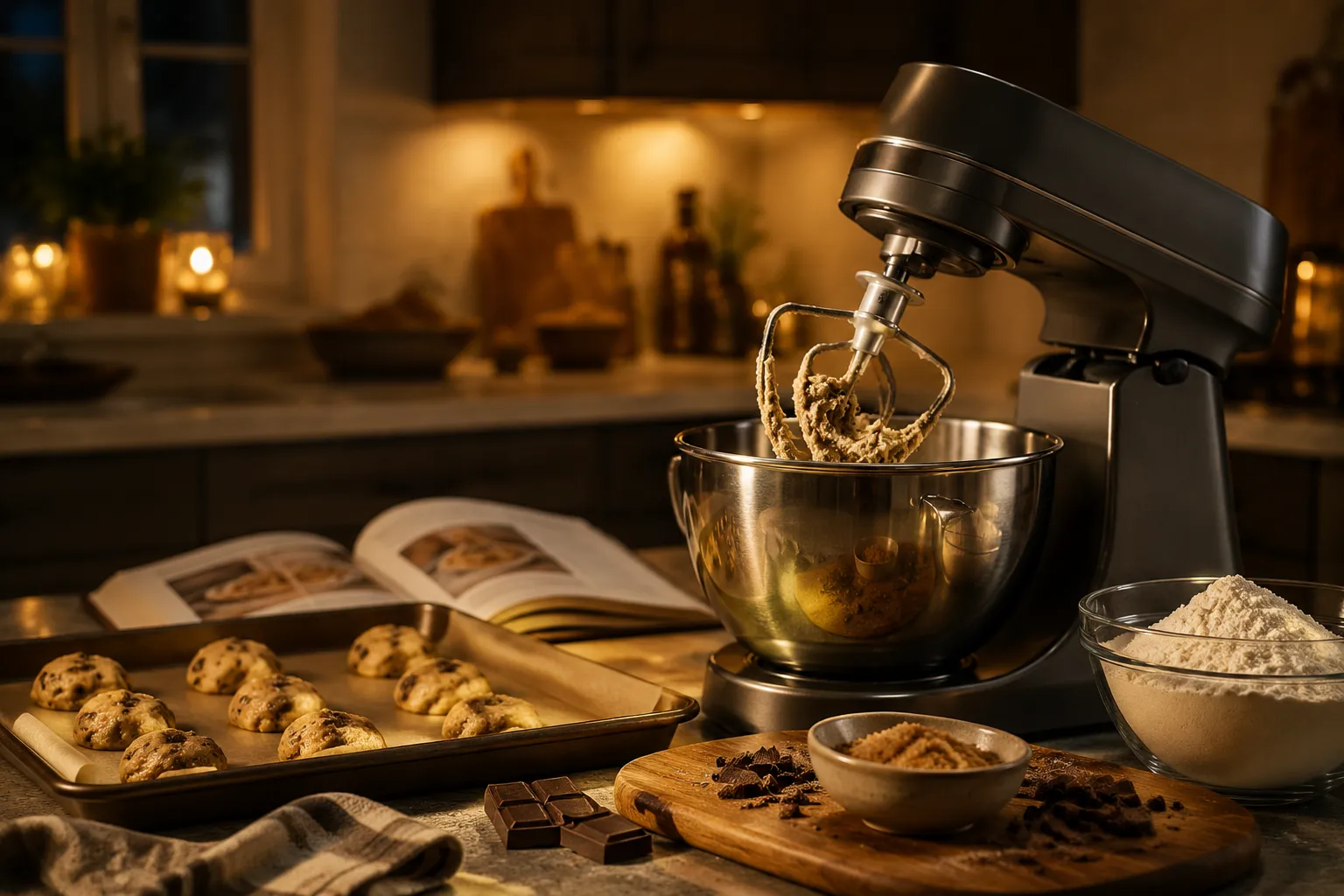
The weekend baking night is a specific ritual with its own physics. The mixer that handles a Tuesday batch of cookies without complaint can groan, hop across the counter, or emit a thin smoke smell when it meets a stiff brioche dough at 11 p.m. Choosing the right stand mixer means understanding what the machine actually does during those hours: it is not a blender with a pretty bowl. It is a torque delivery system, and the bowl, the hook, and the motor all have to work as one unit for the thing to be worth the cabinet space it takes.
The market splits into two honest camps. There are the heavy, direct-drive machines with metal gears and a motor that sits low in the base, and there are the lighter, tilt-head models with a motor that powers the attachments from behind. Both can make bread. Both can whip cream. The difference shows up in the third year, or the fourth, when one machine still locks its head down with a clean click and the other has developed a wobble that makes the dough hook scrape the bowl in a steady, annoying rhythm.
The first question to settle is not brand loyalty. It is whether the mixer will live on the counter or in a cabinet. A machine that stays out gets used more, and a machine that gets used more justifies its price. The heavy machines, the ones that weigh thirty pounds or more, do not get moved around. They sit in a corner and they become part of the kitchen landscape. The lighter models, around twenty pounds, can be lifted onto a shelf after a baking session, but most people stop doing that after the second month. The machine ends up on the counter anyway, and then the weight difference only matters when the machine has to hold itself steady under a heavy dough load.
A person shopping for a first mixer often assumes the bowl size is the main spec. That is only half the story. The 5-quart bowl on a standard model looks generous, but the usable capacity for bread dough is closer to two and a half or three pounds of flour. The hook needs room to knead, and a full bowl does not knead. It just pushes the dough around in a dull circle. The real questions are about the hook itself and how it moves through the bowl.
The Hook That Does the Work
Watch a mixer knead a stiff dough for ten minutes. The good ones develop a rhythm. The dough gathers on the hook, slaps the side of the bowl, folds over itself, and then stretches back. The hook on a quality machine is shaped to pull the dough down and through, not just stir it. The cheap hooks are often too short or too straight, and the dough just spins in place, never developing the gluten network that gives bread its crumb.
The material of the hook matters more than most reviews admit. A solid metal hook, cast or machined, has heft. It carries the dough with it. The hollow metal hooks on budget machines flex slightly under load, and that flex translates into uneven kneading. The dough gets worked on one side and barely touched on the other. The result is a loaf that rises unevenly and bakes with a dense corner.
There is also the question of whether the hook reaches the bottom of the bowl. A hook that sits too high leaves a layer of unincorporated flour and butter at the bottom, and the baker has to stop the machine, scrape down, restart, and repeat. A hook that sits too low scrapes the bowl and leaves gray metal marks in the dough. The adjustment is usually a small screw on the neck of the machine, and a good mixer holds that adjustment for years. A weak mixer drifts out of alignment in months.
Motor Size and the Stiff Dough Test
The motor rating on the box is a starting point, not a verdict. A 300-watt motor can handle a lot if the gearing is right. A 500-watt motor can stall on a dense bagel dough if the torque curve is wrong. The number that matters is the torque, the twisting force delivered to the hook, and that is rarely printed on the box.
A simple test tells the truth. Take a recipe for a stiff bread dough, one with a hydration around 60 percent, and run it on medium speed for eight minutes. Watch the machine. Does the base stay planted? Does the motor pitch stay steady, or does it labor and slow down? The good machines hum. They do not whine. The whine is the sound of the motor straining against a load it cannot comfortably handle, and that strain shortens the life of the machine.
The direct-drive machines, the ones with the motor in the base and the bowl that lifts up, have a clear advantage here. The motor sits directly below the bowl, so the torque path is short and simple. The tilt-head machines route the power through a right angle gearbox at the top of the machine, and that gearbox is the weak point. When a tilt-head mixer fails, it usually fails at that gearbox, often with a loud crack and a hook that stops turning while the motor keeps spinning.
That does not mean the tilt-head design is wrong. It means the buyer should look for a metal gearbox housing, not a plastic one. The plastic housings are cheaper to make and quieter for a while, but they wear. A metal housing, even on a lighter machine, lasts through years of weekend baking without developing the slop that makes the head droop.
The Bowl Lift vs. the Tilt Head
The two architectures feel different in daily use, and the difference is not just cosmetic. The tilt-head machine is easier to use for quick tasks. The baker flips the head up, drops in the paddle, adds the ingredients, and flips the head down. The bowl sits in place, usually on a simple base with a twist to lock it. This works beautifully for cakes, frostings, and whipped cream, tasks that take minutes and require frequent scraping.
The bowl-lift machine is slower to load. The baker has to lower the bowl into place, then crank it up to meet the attachments, then crank it back down to remove the bowl. That takes about ten seconds more per use, and for a quick meringue, those ten seconds feel like an eternity. But the bowl-lift machine handles heavy doughs with more authority because the head is locked down mechanically. There is no hinge to flex under load.
For a baker who makes bread once or twice a week and cakes in between, the bowl-lift machine is the better long-term purchase. The extra ten seconds per use is nothing compared to the steadiness of a locked head. For a baker who mostly makes cookies, pancakes, and whipped cream, the tilt-head is more pleasant and perfectly adequate. The bread test only matters if bread is actually on the menu.
What the Paddle Actually Does
The flat paddle gets less attention than the dough hook, but it is the attachment that sees the most use. The paddle needs to scrape the bowl as it turns, not just stir the contents. The good paddles have a flexible edge that wipes the bowl clean with every pass. The cheap paddles have a rigid edge that leaves a thin film of batter on the sides, and that film becomes a crust by the time the cake goes into the oven.
The paddle also needs to reach all the way down. A paddle that hovers a quarter inch above the bottom of the bowl leaves a patch of unmixed butter and sugar, and the baker has to scrape it with a spatula and hope the rest of the batter is consistent. The adjustment is the same screw that positions the hook, and a quality machine holds that position. A worn machine lets the paddle drift upward over time.
Some mixers now come with a beater that has a built-in scraper, a silicone edge that folds through the batter and cleans the bowl continuously. This is a genuine improvement, not a gimmick. It cuts the number of times a baker has to stop and scrape in half, and it makes the finished batter more uniform. The scraper beater is worth seeking out, even if it means buying it as an accessory.
The Whisk and the Whip
The wire whisk is where the cheap machines give themselves away. A good whisk is a cage of fine wires that captures air and folds it into cream or egg whites. A cheap whisk has fewer wires, spaced farther apart, and it just moves the liquid around without incorporating much air. The difference shows in the time it takes to reach stiff peaks.
A quality machine whips a cup of cream in about three minutes. A weak machine takes six or seven, and the cream often warms up from the motor heat before it reaches stiff peaks. The motor heat is another detail worth noticing. The motor on a good mixer is vented so the heat escapes away from the bowl. On some budget models, the motor sits close to the bowl, and a long whipping session warms the cream from below, making it harder to whip.
The whisk also needs to reach the bottom of the bowl without touching it. The same alignment issue applies. A whisk that sits too high leaves a layer of unwhipped cream at the bottom, and the baker has to lift the bowl and tilt it to catch the last bit. The good machines have a whisk that reaches just low enough to pull everything up into the wire cage.
The Price of Quiet
The noise level of a stand mixer matters more in an apartment than in a house, but it matters everywhere. The direct-drive machines with metal gears are louder, a solid mechanical hum that carries through walls. The belt-driven machines, and the ones with nylon gears, are quieter, but they sacrifice durability. The nylon gears are sacrificial by design. They are meant to strip instead of damaging the motor when the dough is too stiff. That is a reasonable trade for a home baker, but it means the gears are a consumable part, not a lifetime component.
Some of the newer machines use a belt drive between the motor and the gearbox. The belt absorbs some of the shock of a stiff dough and smooths out the power delivery. These machines run quieter and feel more refined, and the belt is a cheap part to replace when it wears. The belt drive is a good middle ground between the harsh metal gears and the fragile nylon ones.
A baker who bakes on weekend nights, with a person sleeping in the next room, should weigh the noise level seriously. A mixer that sounds like a small engine starting up at 11 p.m. is a mixer that gets used less often. The quiet machines are not necessarily better machines, but they are machines that fit better into a shared living space.
The Attachments That Earn Their Place
The pasta roller and the meat grinder are fun for a week. The attachments that earn their place are the ones that turn the mixer into a second appliance. The food grinder attachment, the one that grinds meat for sausage or burgers, is solid and useful, but it is not the best use of the machine. The spiralizer and the ice cream maker are gimmicks. The attachments that last are the simple ones: the second bowl, the pouring shield, and the scraper beater.
The pouring shield is the unsung hero. It is a plastic ring that sits around the top of the bowl with a small chute for adding flour or liquid. It catches the splatter when the mixer runs at high speed, and it lets the baker add ingredients without stopping the machine. It looks like a cheap piece of plastic, and it is, but it changes the experience of making a cake completely.
The second bowl matters for a specific reason. A baker making a layer cake often needs the whites whipped separately from the butter and sugar. With one bowl, that means washing and drying the bowl between steps, which cools it down and adds time. With a second bowl, the baker can have the whites going in one bowl while the butter and sugar cream in the other. It is a luxury, but it is a luxury that shows up in the finished cake.
The Repair Question
Stand mixers are supposed to last a decade or more. The big brands have repair networks and sell parts directly. The smaller brands, and the budget brands, often do not. When a budget mixer breaks, the owner usually throws it out and buys another, which is the real cost of a cheap machine. The price difference between a $200 mixer and a $500 mixer shrinks when the $200 mixer needs replacing every three years.
The repair network is worth checking before the purchase. A quick search for the brand name plus the word replacement parts tells a lot. The good brands have a full catalog of bowls, hooks, whisks, gears, and motors. The bad brands have nothing but the machine itself. A mixer that cannot be repaired is a mixer with a built-in expiration date.
The other repair question is the grease. The gears in a stand mixer are packed with food-grade grease, and that grease degrades over time. A well-maintained mixer gets its grease replaced every few years, a job that requires opening the gearbox. The good brands have instructions and kits for this. The cheap brands do not, and when the grease dries out, the gears grind and fail.
The Counter Space Math
A stand mixer is roughly the size of a small microwave, but it is not shaped like one. It has a tall neck and a wide bowl, and it does not fit neatly under upper cabinets. The clearance above the counter matters. A machine with a tilt head needs even more space, because the head swings up and back. The baker should measure the space under the cabinets before buying, not after.
The weight of the machine matters for the counter itself. A thirty-pound mixer on a flimsy kitchen island will vibrate and walk during a kneading cycle. The rubber feet on the base help, but they only do so much. A solid counter, or a cutting board placed under the machine, makes the difference between a steady mixer and one that edges toward the counter edge over the course of a year.
The cord length is a small detail that becomes a big annoyance. A mixer with a short cord forces the baker to either work near a specific outlet or use an extension cord. The better machines have cords that reach six feet or more, and some have a cord that wraps around the base for storage. The cord wrap seems trivial until the mixer sits on a counter with a tangle of cord hanging over the front.
The Color and the Finish
The color of a stand mixer is a genuine decision, because the machine sits on the counter for a decade. The white and silver machines are safe and neutral. The bright colors, the reds and the blues and the greens, are statement pieces. The pastel colors from the big brands, the pistachio and the butter yellow, change the feel of a kitchen more than almost any other small appliance.
The finish matters for cleaning. A glossy machine shows fingerprints and flour dust instantly. A matte finish hides the smudges but is harder to wipe clean. The painted surfaces on some budget machines chip after a year of use, leaving bare metal patches. The quality machines use a baked enamel finish that resists chips and scratches. The difference is visible in the second year, when one machine still looks new and the other has worn patches on the neck where the hand grips it to tilt the head.
A baker should choose a color that will not embarrass them in three years. The trendy colors fade from favor, and a machine that matched the 2023 kitchen aesthetic can look dated by 2027. The classic colors, the white, the black, the chrome, never go out of style. The bold colors are for people who know they will still love the color when it goes out of fashion.
What the Used Market Offers
The used market for stand mixers is strong, and a used mixer from a quality brand is often a better purchase than a new mixer from a budget brand. The big brands have sold millions of machines over the decades, and the older models are built from metal where the newer ones use plastic. A used mixer from the 1990s with a metal gearbox and a working motor can outlast a new budget mixer built with nylon gears.
The risks are real. A used mixer might have worn gears, a loose head, or a motor that smells burnt at high speed. The buyer should run a stiff dough test before committing. The seller who is honest about the machine's history is worth trusting. The seller who says it works fine but has not used it in years is a warning sign.
The used market also offers the chance to buy the attachments that were sold separately. A used mixer often comes with the grinder and the pasta roller and the shredder, attachments that would cost hundreds of dollars new. The attachments are a bonus, not the main event, but they add value to a purchase that is already a good deal.
The Decision on a Cold Saturday Night
The real test of a stand mixer is the third or fourth time it gets used, when the novelty has worn off and the machine has to earn its place. The mixer that makes a person look forward to baking is the right one. The mixer that feels like a chore, the one that requires coaxing and scraping and restarting, gets pushed to the back of the counter and then into a cabinet.
A baker who knows the specific loaves and cakes they will make for the next five years can choose with confidence. The bread baker needs the bowl-lift machine with the sturdy hook and the solid motor. The cake baker needs the tilt-head machine with the scraper beater and the second bowl. The person who just wants to make cookies on a weekend night needs any machine from a reputable brand, as long as it has a metal hook and a bowl that locks in place.
The machine sits there, heavy and patient, waiting for the next Saturday when the lights are low and the flour comes out. The good ones hum through the night, turning butter and sugar into something that fills the kitchen with warmth. The bad ones sit unused, a monument to a decision made on paper instead of in the kitchen. The choice comes down to honesty about the baking that will actually happen, not the baking that sounds good in the store.