
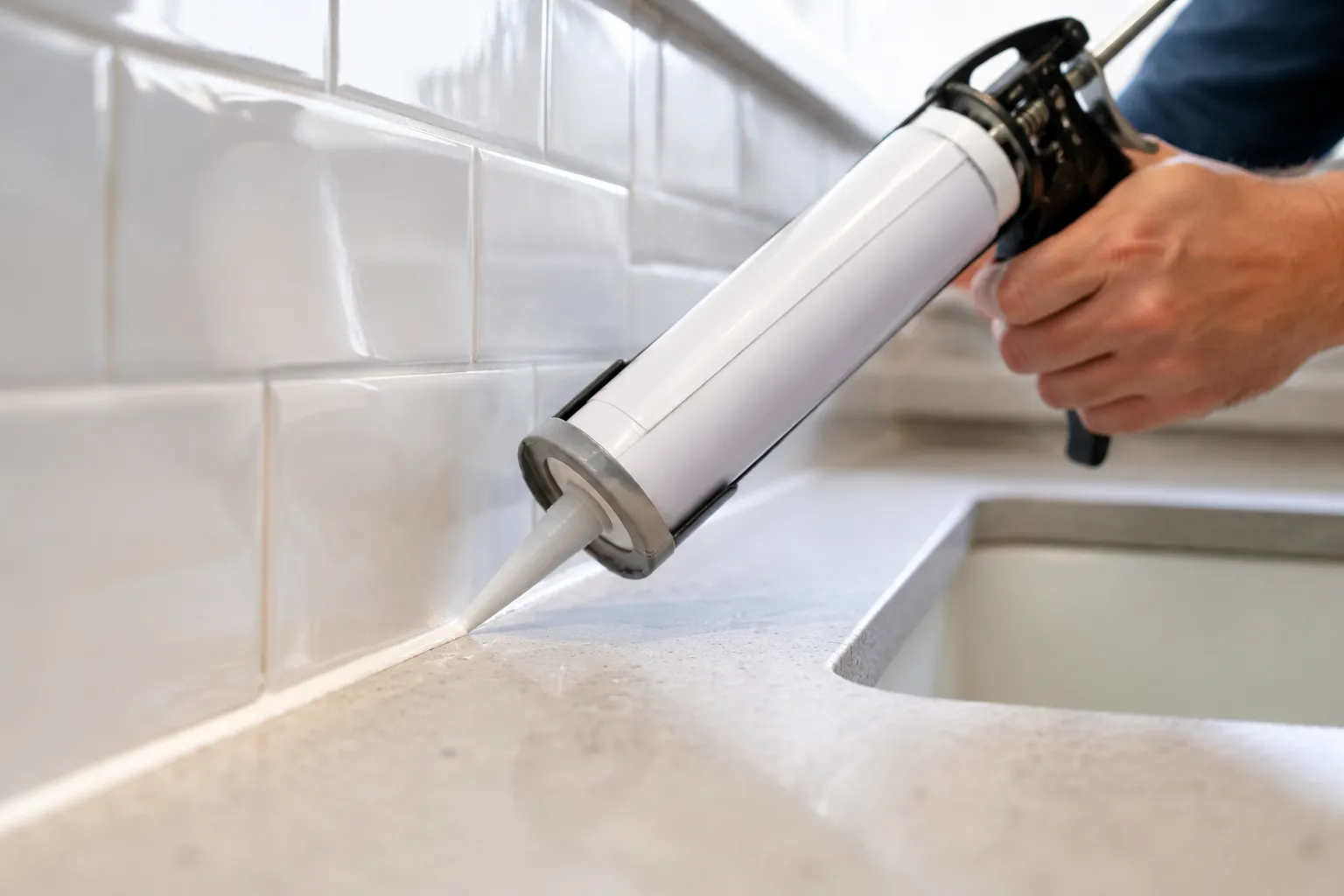
The caulk gun is the only tool in the home repair arsenal that people apologize for before they even pick it up. A person will confidently attack a wall with a circular saw or spend an afternoon wrestling with plumbing, but mention that a bead of caulk needs to go down and the tone shifts. There is a resigned shrug, a muttered comment about it always ending up a mess, and a promise that it will look fine once painted over. That apology is the problem. The mess is not a personality flaw or a fact of life. It is a mechanical issue, and like most mechanical issues, it has a specific fix.
Drip control is the difference between a seam that disappears and a seam that looks like a white slug crawled across the counter. The material itself is cooperative. A smooth, continuous bead of acrylic latex or silicone is one of the easiest things to lay down once the tool behaves. But the tool has a bad habit. It keeps pushing out material when nobody is squeezing it. That is the drip. That is the slug. And the fix is not a steadier hand or a more expensive tube of caulk. It is a change in how the gun is loaded, held, and released.
The Rod Keeps Turning
Most drip problems start before the trigger is ever pulled. The standard caulk gun has a long metal rod that runs through the handle. One end pushes the plunger into the tube, the other end has a bent hook or a flat plate that serves as a release. Pulling the trigger ratchets that rod forward. Squeezing that release bar at the back should pull the rod back and stop the pressure. That is the theory. In practice, the release mechanism is a crude piece of stamped metal that does not pull the rod back far enough to relieve pressure, or it does not hold the rod in a fully retracted position.
The result is a gun that stays hot. The plunger is still pressing against the caulk even when the trigger is released. Any slight bump, any change in temperature, any time the gun is set down, and the caulk oozes out. The fix for this is to stop using the release bar as a pressure reliever and start using it as a parking brake. When a person finishes a run, the habit should be to squeeze the release, pull the rod back a quarter inch, and let the pressure drop. That quarter inch is enough to suck the plunger away from the caulk and stop the flow. It takes one second. It solves eighty percent of drip complaints.
Some guns are worse than others. The cheap ones with a thin, stamped release bar tend to flex instead of releasing. The pivot point wears out after a few tubes, and the bar starts to slip, so the rod creeps forward on its own. A person will load a gun, set it down to position the tube, and come back to find a puddle forming at the nozzle. That is not carelessness. That is a worn gun. The only fix for a gun that cannot hold a rod in place is a new gun, and the replacement does not need to be expensive. It needs to have a release bar that actually locks.
Punching the Tube
The second cause of drips is the moment of first pull. A fresh tube of caulk has a sealed plastic nozzle. Cutting off the tip with a utility knife is standard practice, but the seal at the base of the nozzle often stays intact. The first squeeze of the trigger pushes the plunger forward, the pressure builds, and then the seal bursts. That burst shoots a glob of caulk out of the nozzle and all over the seam. The tool then keeps pushing material because the rod is sitting in a high-pressure position.
The fix is to punch the seal before loading the tube. A long nail, a stiff wire, a Phillips screwdriver, anything thin enough to fit down the nozzle and strong enough to break the foil or plastic membrane at the base. Pushing through that seal by hand while holding the tube over a trash can gives a person control. The caulk comes out as a deliberate squirt, not an explosion. Once the seal is broken, the rod can be backed off, and the gun is in a neutral state. The first real squeeze will produce a controlled bead instead of a surprise glob.
This also applies to the puncture point at the bottom of the tube. Most caulk tubes have a cardboard or plastic plug at the base. If that plug is not punctured, the plunger can push the entire tube forward without actually pressing the caulk. The gun feels like it is working, the rod is moving, and then suddenly the plug gives way and the plunger slams forward. That slam produces a drip. Punching the base plug with a screwdriver before loading takes five seconds and prevents the entire sequence.
The Angle of the Cut
Nozzle geometry is the quiet contributor to drip. Most instructions say to cut the tip at a 45 degree angle, and people dutifully do that with a utility knife. But the cut matters less than the size of the opening, and the size of the opening matters less than whether the cut leaves a clean lip. A ragged cut, one that tears the plastic or leaves a flap, will catch on the surface as the gun moves. That catching causes the caulk to pile up in front of the nozzle instead of flowing into the joint. The pile-up pulls the nozzle away from the surface, and then the caulk is being laid on top of the seam instead of into it. That is not a drip, but it reads as one because it makes a mess.
The cleanest cut comes from a sharp blade and a single pass. A person should cut the nozzle at a steep angle, closer to 60 degrees, which gives a longer opening that can be pressed flat against the joint. The opening should be sized to the gap being filled. A tiny hairline crack needs a tiny hole. A quarter inch gap needs a bigger one. The mistake is cutting once and using it for everything. A small hole produces a thin bead that takes forever to fill a big gap, and the temptation is to squeeze harder, which produces a surge of material that ends in a drip.
A person should cut the nozzle, then run a finger along the inside of the opening to check for plastic shavings or a partial blockage. A tiny sliver of plastic inside the nozzle will act like a baffle, splitting the stream and sending caulk sideways. That sideways spray is the start of many drips. One quick swipe with a finger or a toothpick clears it.
The Trigger Discipline
The actual mechanics of pulling the trigger are the third factor. A caulk gun is a ratchet. Each pull of the trigger moves the rod a fixed distance, often a quarter inch or more. That means the gun does not allow fine control. A person cannot squeeze a tiny bit. They can only squeeze one ratchet click, which is often too much. That overshoot pressurizes the tube, and when the trigger is released, the pressure has nowhere to go except out the nozzle.
The workaround is to pull the trigger in small, deliberate clicks and to keep the gun moving during the click. If the gun is stationary when the trigger is pulled, the caulk piles up at the nozzle. If the gun is moving, the caulk lays down as a bead. The rhythm is: move, click, move, click. It is not: click, stop, move, click, stop. The continuous motion is what distributes the material evenly and prevents the pressure buildup that causes the drip when the gun stops.
When the end of a run approaches, the trigger should be released early, about an inch before the end of the seam. The rod will continue to push a little material as the ratchet settles, and that residual pressure will finish the bead. If a person pulls the trigger all the way to the end and then releases, they will have a blob at the end of the seam. Releasing early lets that blob form off the edge of the work, where it can be wiped away cleanly.
The Drip Cup Is Not a Solution
There is a class of accessories sold to fix this problem, and they are mostly a waste of money. The drip cup, a small plastic or metal tray that clips around the nozzle, catches the drips but does not stop them. The caulk still oozes. The cup just collects it in a place where it will crust over and then break off in chunks. A person will set the gun down, the drip cup fills, and then the gun is left with a dried blob of caulk stuck to the nozzle that has to be peeled off before the next use. The cup turns a small problem into a recurring cleanup chore.
Drip-free nozzles, the ones with a spring-loaded valve or a twist cap, work better but add their own friction. The valve mechanisms clog after a few uses, and the twist caps are easy to lose. The real fix is not a gadget. It is a habit. Back off the rod when the gun is not in use. That single motion, pulling the release bar and drawing the rod back, is the entire solution. Everything else is a bandage.
The Cleanup That Prevents the Next Drip
How a person cleans up at the end of a job determines how the gun behaves the next time it is used. Caulk is a paste. If it dries in the nozzle, the next user will squeeze the trigger and feel the rod push against a plugged nozzle. The pressure builds until the dried plug blows out, and the resulting surge is a mess. The fix is to pull the rod back, remove the tube, and wipe the nozzle clean before the caulk sets. A wet rag or a paper towel is enough if it is done immediately. If a person waits until the next morning, they are scraping dried caulk out of a plastic cone with a nail.
For a partly used tube, the best move is to leave the nozzle clean and stick a nail, a screw, or a golf tee into the opening. That plug keeps air out and stops the caulk from skinning over. The next use starts with a clean pull instead of a fight with a crusted tip. This is the kind of detail that separates a person who dreads caulking from a person who does it in ten minutes without thinking.
The Rod is the Core
None of this matters if the gun itself is bent or sloppy. A caulk gun is a simple tool, but it is a precision tool in the sense that its tolerances determine its behavior. The rod should be straight. The ratchet teeth should be sharp. The release bar should snap back with authority. A gun that has been dropped, used as a hammer, or left to rust in a damp garage will never produce a clean bead. The rod will bind, the ratchet will skip, and the release will slip. Every drip prevention technique depends on a gun that can hold a rod in place and then release it on command.
Testing a gun takes ten seconds. Load a tube, squeeze the trigger once, then pull the release bar. If the rod moves back freely, the gun is fine. If it sticks, if it requires wiggling, if the rod creeps forward when set down, the gun is done. A midrange gun, the kind with a full metal frame and a comfortable grip, costs less than a single service call to fix a botched caulk job. It is a false economy to keep fighting a worn-out tool.
The drip is a signal. It says the gun is holding pressure it should not be holding, or the nozzle is obstructed, or the rod is being advanced when it should be idle. A person who reads that signal and fixes the cause gets clean seams. A person who wipes the drip with a rag and keeps going will be wiping drips forever. The caulk is not the problem. The gun is. And the gun is a machine that can be made to behave.